
Reducer Application Guide: Textile, Woodworking & Food Lines
Reducer Application Guide: Textile, Woodworking & Food Lines
A textile dyeing range, a four-sided planer and a filling line can all be driven by gearmotors from one supplier — but almost nothing else about their drive requirements is the same. Heat, humidity and dye chemicals dominate the first; abrasive dust and variable load dominate the second; washdown and hygiene dominate the third. Matching a REDUCER to any of them therefore starts with the working-condition record of the line, not with the model list.
This guide takes the three production scenarios one at a time, names the units that fit each duty, sets out the supporting equipment, operating modes and special requirements, and closes with the purchase terms and acceptance criteria worth agreeing before an order is placed.
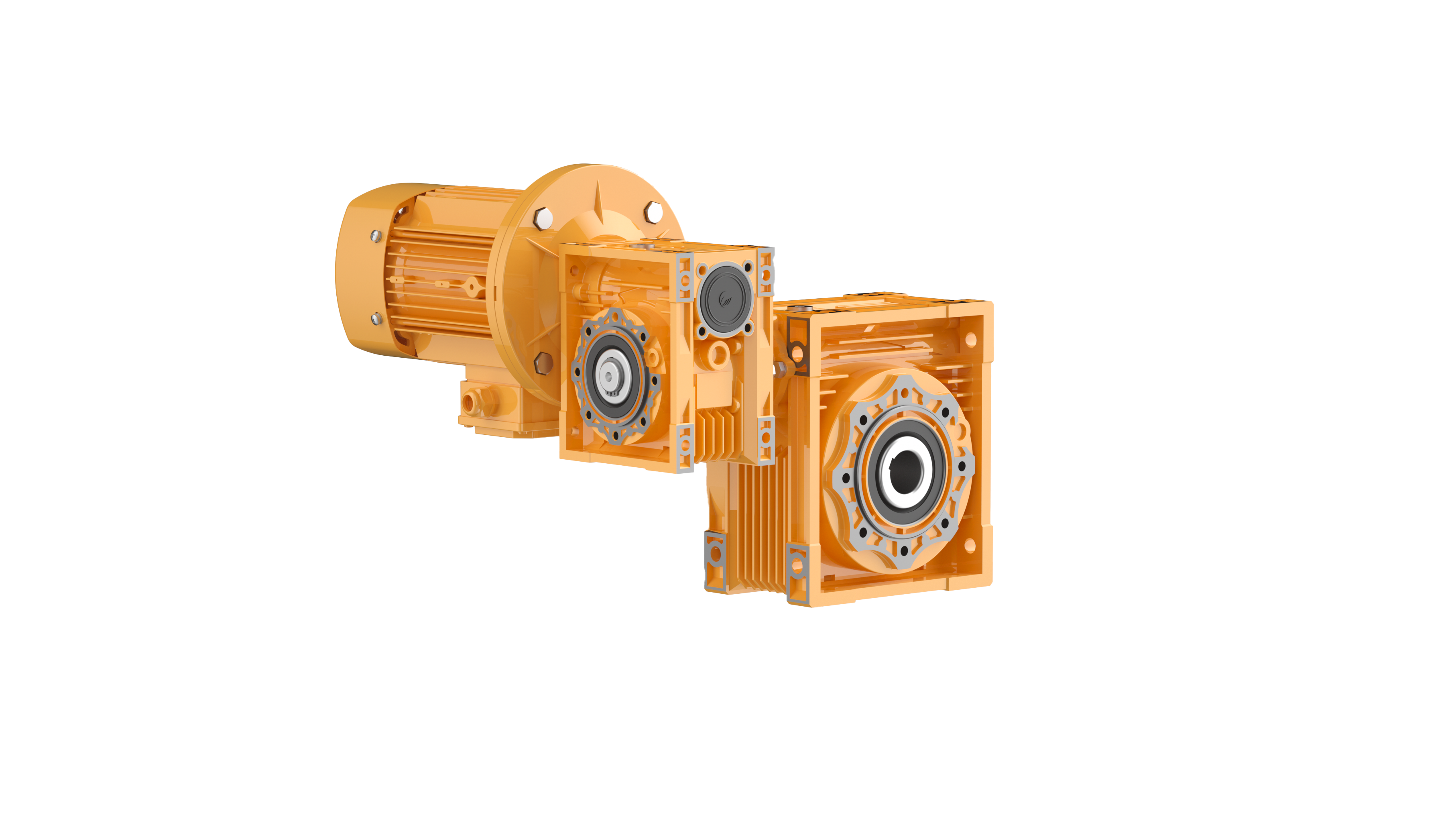
RV Series worm gearboxes are the high-ratio, load-holding option in the range; their published application scope is stage equipment, door operators and electric power.
At a glance: which series fits which line
- Textile machinery — high temperature, humidity, acid-base solvents and heat radiation. The drive transmits power, reduces speed and increases torque to hold cloth guide rollers and other actuators at controlled low speed through washing, dyeing, folding and hair removal. Documented match: R/F/K/S Series helical gearmotors, NCJ Series helical gearmotors, and heat- or corrosion-resistant Industry Customized Products.
- Woodworking machinery — all-weather continuous running in high dust with variable load at normal temperature. The drive provides speed reduction and torque increase for precision motion control of woodworking tools. Documented match: R/F/K/S Series helical gearmotors, customized woodworking builds, and matched motor and converter accessories.
- Food and beverage lines — continuous operation in humid cleaning areas, hot and cold stations, variable load and frequent start-stop. The drive runs fillers, cappers, conveyors, mixers, sterilizers and labelers. Documented match: R/F/K/S Series helical gearmotors, corrosion-resistant customized units, and matched drive accessories.
Why the same reducer cannot serve all three lines
The three industries share one mechanical function: power transmission, speed reduction and torque increase, with precise motion control at the driven axis. What separates them is everything around that function — ambient temperature, moisture, chemical exposure, dust load, cleaning regime, start-stop frequency and how much the load varies across a shift.
A drive sized only on torque will usually be over-specified on a clean axis and under-protected on a wet one. The working-condition records for textile, woodworking and food applications each carry their own list of special requirements, and those requirements decide housing treatment, sealing, lubricant and motor choice as much as the ratio does. In practice the selection order is: duty profile first, environment second, ratio and frame size third.
Industry background: a broad market, three demanding niches
The global gear reducer market was valued at approximately USD 1.96 billion in 2026 and is projected to reach USD 2.58 billion by 2035, according to Business Research Insights (published July 2026). That figure covers speed and gear reducers specifically; research published under the wider label “industrial gearbox” is considerably larger because it includes heavy-duty wind, mining and mill drives, so the two categories should not be compared directly.
Textile, woodworking and food equipment sit inside that market as continuous-process users. All three working-condition records list all-weather continuous operation as a standard mode, alongside intermittent and variable-speed running — which is why service life, maintenance access and protection against the local environment carry as much weight in these industries as nominal torque.
STARSHINE DRIVE (Guangdong Starshine Drive Co., Ltd.) is a transmission manufacturer based in Sanshui District, Foshan City, Guangdong, China, with origins in a mould factory established in 1965. The company manufactures gearboxes, geared motors, variators and matched drive components, operates a factory of 53,333.33 m² with around 400 employees and an annual output of 500,000 units/sets, and runs a provincial-level engineering technology R&D centre with 40 engineers. Its range covers the NCJ series gear reducers, R/S/K/F series high-precision gear reducers, RV series worm gear reducers, SP series planetary reducers, SI series industrial gearboxes, SNKG series gear reducers, JWB-X series mechanical stepless variators, B/JXJ series cycloidal pinwheel reducers and XGK series hypoid gear reducers. Products are stated to comply with ISO, CE and CCC standards, and every unit passes 100% online air tightness testing, 100% online noise testing and 100% motor testing.
Textile machinery: heat, humidity and dye chemicals
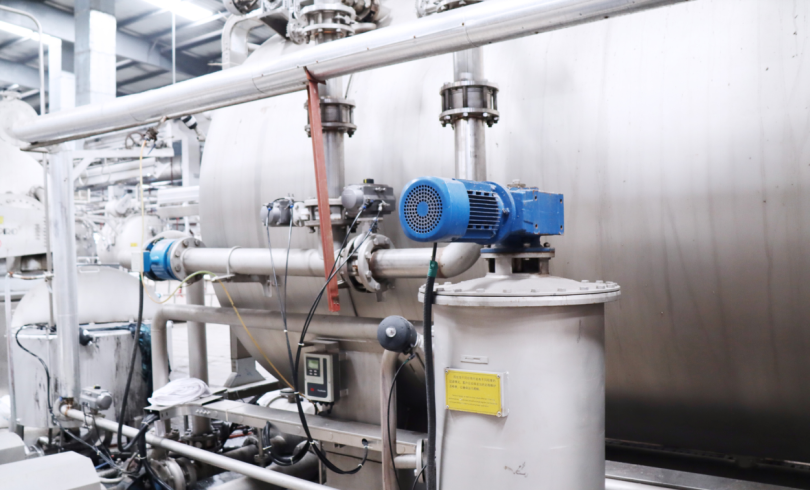
Dyeing and washing stations combine high temperature, humidity, heat radiation and acid-base solvents at the drive position.
What the line asks of the drive
Textile machinery operates in a high-temperature and humid environment with acid-base solvents present during dyeing and with heat radiation reaching the drive. The reducer's job is to transmit power, reduce speed and increase torque for cloth guide rollers and other actuators, so that washing, dyeing, folding and hair-removal processes hold precise motion control at low, steady speeds. The equipment set to be driven includes cotton rollers, cloth guide rollers, washing machines, dyeing machines, wide rollers, hair-removal devices and X-Y plaiters.
Which units fit
R/F/K/S Series helical gearmotors are the base recommendation because textile is listed among their applicable industries and because their documented gearing supports steady low-speed running: gears are 20CrMnTi, carbonitrided to HRC55–65 and ground to grade 6, single-stage efficiency is above 96%, and the single-stage ratio range of 1.3–289.74 covers most roller and pad-roll duties. Where published S Series data is used as a sizing reference, the catalogue lists sizes SHS37–SHS97 with ratios of 6.8–288, power of 0.12–22 kW and output torque of 90–4000 N·m.
NCJ Series helical gearmotors suit stations where the line speed has to be trimmed during a batch. The series runs a wide-frequency, high-performance motor that works at full load between 20 Hz and 60 Hz, delivers 92–96% efficiency, and uses a special lubricating oil rated for 20,000 hours of normal use. For aggressive dye-house positions, the heat-resistant and corrosion-resistant builds within Industry Customized Products are the documented route: strong anti-corrosion paint against acid-base solvents, moisture-proofing and heat-radiation adaptability appear as special requirements in the textile record.
Operating modes and supporting equipment
Textile drives run in all-weather continuous operation, intermittent operation and variable-speed operation. The supporting equipment to be matched is the cotton roller, cloth guide roller, washing machine, dyeing machine, wide roller, hair-removal device and X-Y plaiter. The full special-requirements list is: high temperature resistance, corrosion resistance against acid-base solvents, moisture-proofing, adaptability to heat radiation at the drive, long service life and easy maintenance.
Woodworking machinery: continuous dust and variable load
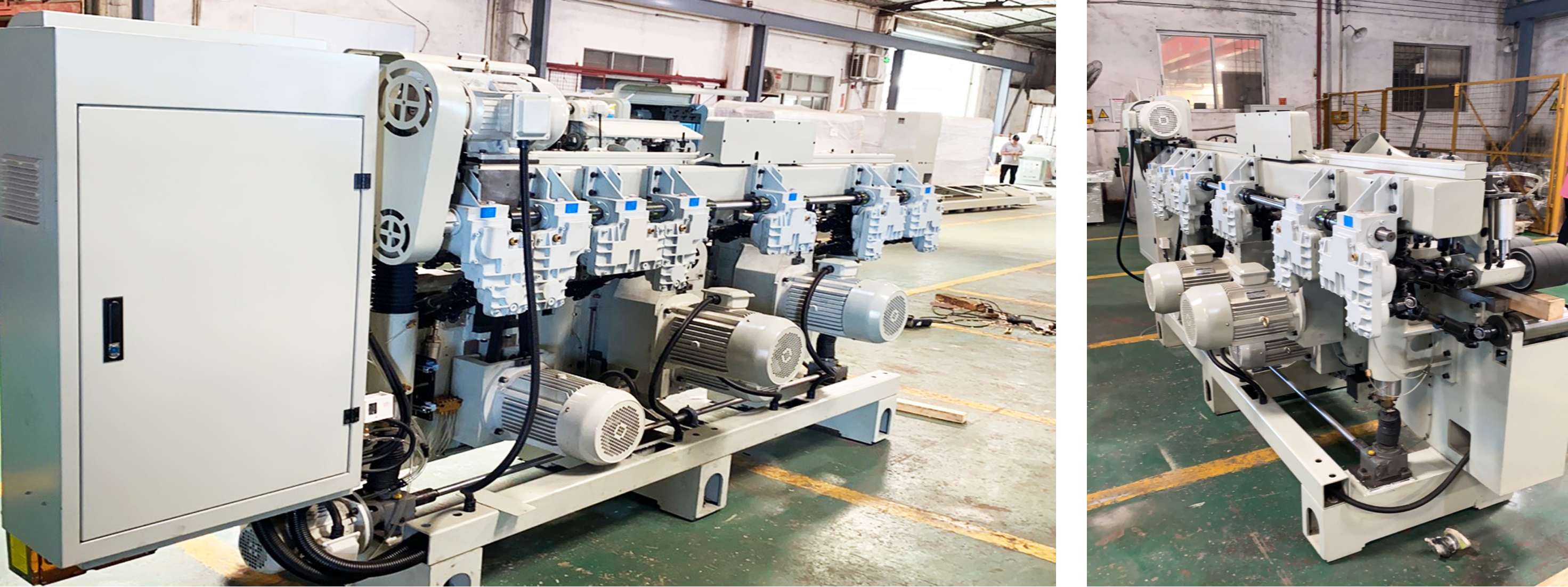
Four-sided planers, edge banders, sanders, double-end tenoners and CNC cutting machines all run continuously in high dust.
What the line asks of the drive
Woodworking machinery runs continuously at normal temperature in a high-dust environment with variable load. The reducer provides power transmission, speed reduction and torque increase for precision motion control of woodworking tools, and is used with four-sided planers, edge banding machines, sanders, double-end tenoners and CNC woodworking cutting machines. Much of this equipment is installed as a production-line upgrade or as an equipment retrofit, which means the drive often has to fit an existing mounting envelope.
Which units fit
R/F/K/S Series helical gearmotors carry the main feed and tooling axes, with helical gearing and ground gears keeping running noise low — the first special requirement named for this industry. Where a machine frame needs a mounting pattern, shaft size or housing finish that the standard range does not carry, Industry Customized Products is the documented route; the customized range explicitly includes a woodworking-specific machine build. Reducer Components and Drive System Accessories — integrated servo motors, three-phase asynchronous motors, permanent magnet synchronous motors and frequency converters — complete the variable-speed axes, with power, voltage, speed and control mode configured to match the reducer and the application.
Operating modes and supporting equipment
Woodworking drives run in all-weather continuous operation, intermittent operation and variable-speed operation. Supporting equipment covers the four-sided planer, edge banding machine, sander, double-end tenoner and CNC woodworking cutting machine. The special-requirements list is: low noise, high dust protection rating, compact design, easy maintenance and long service life.
Food and beverage lines: washdown, hygiene and frequent start-stop
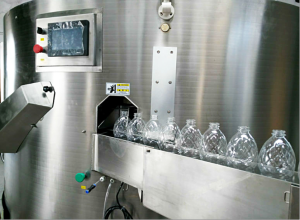
Filling, capping, conveying, sterilizing and labeling stations combine humid cleaning areas with hot and cold zones.
What the line asks of the drive
Food and beverage equipment runs continuously in humid cleaning areas, with high or low temperatures at sterilization and freezing stations, variable load and oil or sugar splashes. The drive provides power transmission, speed reduction and torque increase for fillers, cappers, conveyors, mixers, sterilizers and labelers, achieving precise motion control across conveying, filling, capping, sterilization, labeling, packing and palletizing.
Which units fit
R/F/K/S Series helical gearmotors cover conveyor, filler and capper axes where the ambient washdown is moderate and the frame can be protected by housing treatment. For stations under direct spray or chemical cleaning, the corrosion-resistant tailored gearbox within Industry Customized Products is the documented answer, because the food record lists stainless steel material and corrosion resistance against acid and alkaline cleaning agents as special requirements. Drive accessories matter more here than on the other two lines: frequent start-stop and repeated speed changes are named operating modes, so converters and matched motors are part of the specification rather than an afterthought.
Operating modes and supporting equipment
Food line drives run in all-weather continuous operation, intermittent operation, variable-speed operation and frequent start-stop. Supporting equipment covers the filler, capper, conveyor belt, mixer, sterilizer (pasteurization or high temperature), freezer, labeler, packer, palletizer and cleaning equipment. The special-requirements list is: food-grade lubricant, high IP rating, corrosion resistance, low noise and stainless steel material.
Where the worm gearbox fits — and where the documentation stops
RV Series worm gearboxes earn their place on high-ratio and load-holding axes. The worm shaft is 20CrMnTi with a special heat treatment for high hardness, the worm wheel uses a patented premium KK alloy copper for wear resistance, ratios run to 100 in a single stage and 10,000 in a double stage, and units at i≥60 are self-locking. Synthetic worm gear lubricating oil is specified to protect transmission efficiency and service life.
The same record also sets a boundary. RV Series application scope is listed as stage equipment, door operators and electric power, and the material listed is aluminium parts. That makes it a strong candidate for a compact, self-locking positioning axis, but it is not documented for stainless-steel washdown duty or for food-grade lubricant. If a food or wet textile station is being considered, treat housing material, sealing and lubricant as open items to confirm with the supplier rather than assuming the worm unit inherits the hygiene properties of the customized range. On dry woodworking axes, the same caution applies to dust protection: the published requirement is a high dust protection rating, and the RV record does not state one.
Putting the three lines side by side
| Line | Working conditions | Operating modes | Matched series | Supporting equipment | Special requirements |
|---|---|---|---|---|---|
| Textile | High temperature and humidity, acid-base solvents, heat radiation | All-weather continuous, intermittent, variable speed | R/F/K/S helical gearmotors; NCJ helical gearmotors; customized heat- and corrosion-resistant units | Cotton rollers, cloth guide rollers, washing machines, dyeing machines, wide rollers, hair-removal devices, X-Y plaiters | High temperature resistance, corrosion resistance, moisture-proofing, heat-radiation adaptability, long life, easy maintenance |
| Woodworking | Continuous, high dust, variable load, normal temperature | All-weather continuous, intermittent, variable speed | R/F/K/S helical gearmotors; customized woodworking builds; drive accessories | Four-sided planer, edge banding machine, sander, double-end tenoner, CNC woodworking cutting machine | Low noise, high dust protection rating, compact design, easy maintenance, long life |
| Food & beverage | Continuous, humid cleaning areas, hot and cold stations, variable load, oil and sugar splashes | All-weather continuous, intermittent, variable speed, frequent start-stop | R/F/K/S helical gearmotors; corrosion-resistant customized units; drive accessories | Filler, capper, conveyor belt, mixer, sterilizer, freezer, labeler, packer, palletizer, cleaning equipment | Food-grade lubricant, high IP rating, corrosion resistance, low noise, stainless steel material |
| Series | Documented technical points | Best-supported role in these lines | Confirm before specifying |
|---|---|---|---|
| R/F/K/S Series helical gearmotors | Single-stage efficiency above 96%; single-stage ratio 1.3–289.74; 20CrMnTi gears carbonitrided to HRC55–65 and ground to grade 6; high-strength cast iron housing; textile, logistics, new energy and grain and oil listed as applicable industries | General-purpose continuous drive for textile rollers, woodworking tooling and food conveying axes | Required output torque, mounting envelope, and the finish or sealing the line environment demands |
| RV Series worm gearbox | 20CrMnTi worm shaft with special heat treatment; KK alloy copper worm wheel; single-stage ratio up to 100, double-stage up to 10,000; self-locking at i≥60; synthetic worm gear oil; aluminium parts; stage equipment, door operator and electric power as applicable industries | High-ratio, load-holding axes where compact reduction and self-locking matter | Whether housing material, sealing and lubricant suit a washdown or dusty line, which the published scope does not cover |
| NCJ Series helical gearmotor | Efficiency 92–96%; 20CrMnTi gears at HRC55–65; wide-frequency motor running 20 Hz–60 Hz at full load; lubricant rated for 20,000 hours of normal use; NCJT04B/J replaces a 1# cycloidal gearbox for energy-saving upgrades | Heavy continuous duty with speed variation, where motor turn-down and oil service life matter | Duty cycle and the actual speed range the line will run |
| Industry Customized Products | Customizable reducers including bucket elevator, ceramic kiln, high-temperature resistant, explosion-proof and corrosion-resistant builds; application list covers textile machinery, packaging machinery and food-processing machinery | Conditions outside standard housings and finishes: heat, corrosion, dust, explosion risk | Drawing approval, material and surface-finish specification, and acceptance test scope |
Step by step: from line description to reducer specification
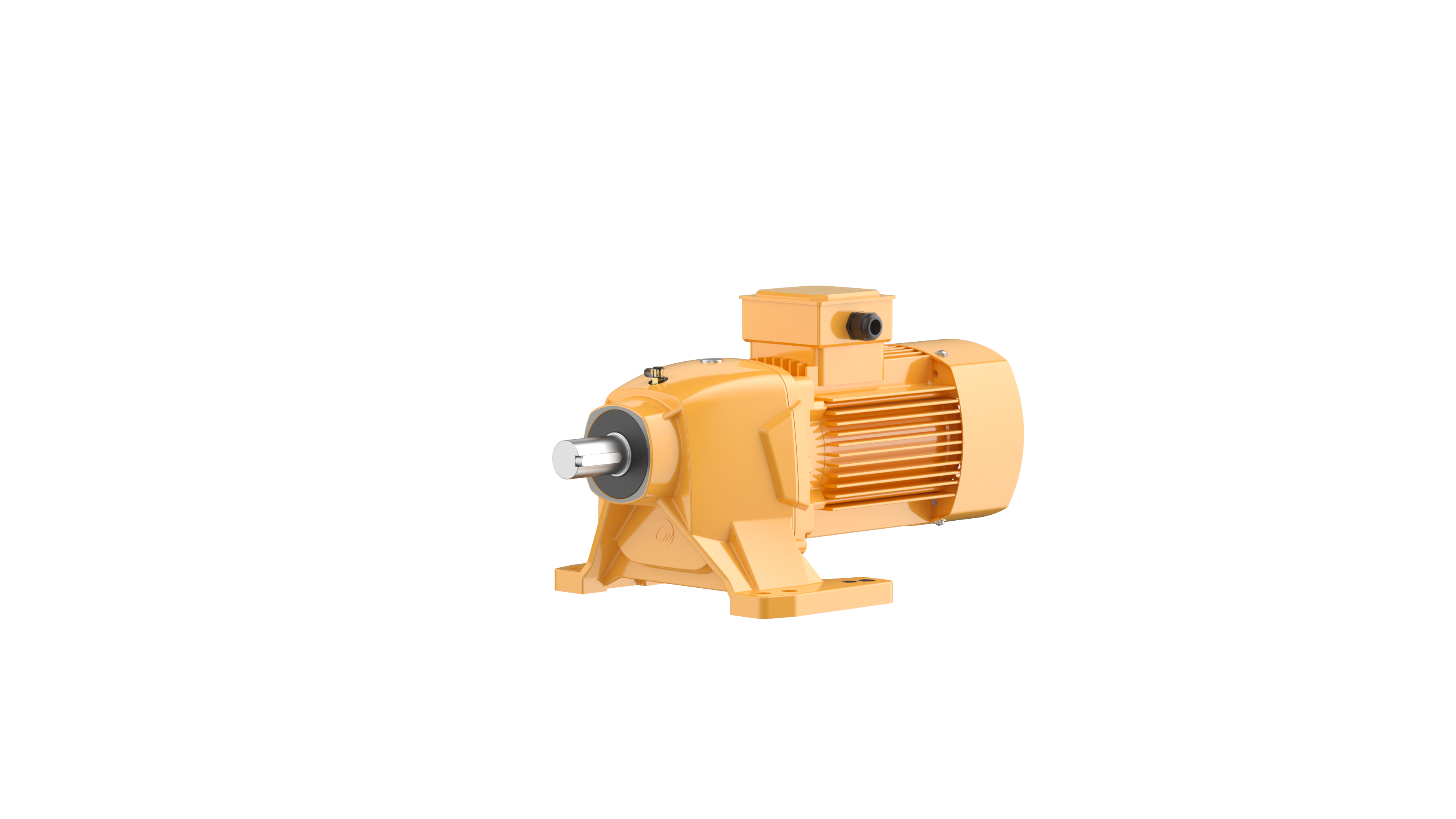
NCJ Series units such as the NCJT04B are positioned as a direct replacement for a 1# cycloidal gearbox in energy-saving upgrades.
- Write the duty profile per axis. Record required output speed, output torque, hours per day, starts per hour, ambient temperature, moisture and chemical exposure, and load variability. The three industries differ mainly in this block, not in the reduction arithmetic.
- Fix the mounting envelope and shaft details. Shaft size, installation dimensions and available space decide whether a standard frame fits or a modified one is needed. Customization can cover ratio, torque, shaft size, installation dimensions, housing material and surface finish, including non-standard modification to customer drawings.
- Choose the ratio and stage count. Use the documented ranges as the first filter: 1.3–289.74 single stage for R/F/K/S, and up to 100 single stage or 10,000 double stage for RV. Stop at the range that meets the speed requirement without adding stages.
- Match the environment, not just the load. For textile, moisture-proofing, heat-radiation adaptability and anti-corrosion paint. For woodworking, a high dust protection rating and low noise. For food, food-grade lubricant, a high IP rating and stainless steel where cleaning agents reach the drive.
- Select the motor and control package. Continuous variable-speed axes on a textile line favour the wide-frequency motor rated for full load from 20 Hz to 60 Hz; frequent start-stop food axes favour a converter plus a matched asynchronous or permanent magnet synchronous motor; servo options cover positioning axes.
- Decide standard or customized. Customization adds engineering steps — drawing approval, material and finish specification — but removes the compromise of forcing a standard housing into an environment it was not described for.
- Agree tests and documentation. Fix the acceptance items before production so the first unit and the hundredth are judged on the same criteria.
Purchase terms and acceptance criteria to settle before the order
These are the terms that most often decide whether a line starts on schedule. Each maps to a documented capability of the supplier rather than to a commercial preference.
- Performance data on paper. Ratio, output torque, input power and efficiency must be stated on the order, using the series figures (above 96% single stage for R/F/K/S; 92–96% for NCJ) as the reference point for heat and power sizing.
- Environment specification. Housing material, surface finish, sealing level and lubricant type should appear as line items, not as notes. This is where textile corrosion resistance and food-grade lubricant requirements are either captured or lost.
- Test records. Every unit passes 100% online air tightness testing, 100% online noise testing and 100% motor testing, plus 100% full-scale testing and finished-product inspection with regular reliability and durability testing. Ask for the records that correspond to your order.
- Compliance documents. Products are stated to comply with ISO, CE and CCC. For machinery bound for the EU, the machine builder's risk assessment follows EN ISO 12100:2010, the Type-A standard setting out general principles for machinery risk assessment and risk reduction.
- Lubricant and service interval. Confirm the factory fill and the stated service life — 20,000 hours of normal use for NCJ Series oil, synthetic worm gear oil for RV Series — and the maintenance access needed to reach the fill and drain points in your installation.
- Quantity and lead time. The published MOQ is one unit. Lead time is quoted at 7–20 days depending on the product for series and OEM/ODM builds, and 15–45 days where vertical customization is required; monthly capacity is listed at 7,000 units for R/F/S/K, 25,000 for RV, 15,000 for NCJ, 5,000 for JWB/JXJ and 5,000 for customized series.
- Spares and support route. After-sales support runs through remote assistance and local dealership services. With 10+ global assembly centres, 100+ dealer partners and an assembly plant in Vienna, Austria serving the European market, it is worth writing the responsible service point into the contract.
- Change control. Where a customized unit is involved, agree how drawing revisions are approved and which revision governs the acceptance test.
FAQ
What compliance and test evidence should a reducer for these three lines come with?
STARSHINE DRIVE states that its products comply with international and domestic standards such as ISO, CE and CCC, and that every unit passes 100% online air tightness testing, 100% online noise testing and 100% motor testing, supported by 100% full-scale testing, 100% finished-product inspection and regular reliability and durability testing. For machinery destined for the EU, the machine builder's risk assessment follows EN ISO 12100:2010, which sets out basic terminology, principles and methodology for machinery safety design. Request the declaration and test records that match the specific order rather than the general catalogue statement.
Can one series cover a textile line, a woodworking machine and a food line?
No single series is documented as the match for all three duty profiles. R/F/K/S Series helical gearmotors come closest, because textile appears among their applicable industries and their ratio and efficiency data suit continuous roller, tooling and conveyor axes. NCJ Series helical gearmotors add wide-frequency motor operation and a 20,000-hour oil rating for textile stations that need speed variation. Corrosion-resistant and high-temperature customized units cover the conditions outside standard housings. RV Series worm gearboxes address high-ratio, load-holding axes, but their published scope — stage equipment, door operators and electric power, with aluminium parts — does not extend to washdown hygiene or food-grade lubricant.
What drives the cost difference between a standard helical gearmotor and a customized unit?
The cost of a customized unit is driven by engineering scope rather than by branding: customization can extend to reduction ratio, torque, shaft size, installation dimensions, housing material and surface finish, including non-standard modification to customer drawings. Each added variable needs drawing work, material selection and its own acceptance check. Series choice also matters, because monthly capacity differs by family — 7,000 units for R/F/S/K, 25,000 for RV, 15,000 for NCJ and 5,000 for customized series — and capacity affects scheduling. The published MOQ is one unit, so a single trial unit does not require a volume commitment.
Can we validate a single unit before ordering for a full line?
Yes — the published MOQ is one unit, and single units pass the same 100% air tightness, noise and motor testing as production quantities. Before the trial unit is built, agree the acceptance values that matter for your axis (ratio, output torque, running noise, tightness, and the environmental items such as finish and lubricant), so the trial validates the specification and not only the hardware. Where the unit is a customized build, allow for the longer 15–45 day customization lead time in the validation schedule.
What lead time should we plan for a line build?
Lead time depends on the product and the production mode. The OEM/ODM capability record quotes 7–20 days depending on the product, while vertical customization — non-standard dimensions, special materials or finishes — is quoted at 15–45 days. Capacity behind those figures is listed at 7,000 units per month for R/F/S/K Series, 25,000 for RV Series, 15,000 for NCJ Series, 5,000 for JWB/JXJ Series and 5,000 for customized series. Confirm the specific delivery date against your line commissioning plan, and for European projects ask which items ship from the Vienna assembly plant.
Conclusion: match the condition, then confirm the number
Textile, woodworking and food lines rarely fail because the reducer was too small. They fail because the reducer was chosen for the load and not for the room it works in — a dye-house position without corrosion protection, a planer axis without dust protection, a filling station without a washdown-compatible housing. The documented match in this range follows the same logic: R/F/K/S Series helical gearmotors as the continuous-duty base, NCJ Series where wide-frequency speed variation and long oil service life matter, RV Series worm gearboxes for high-ratio load-holding axes within their stated scope, and Industry Customized Products wherever heat, corrosion, dust or explosion risk sits outside the standard housing.
Once the series is fixed, the order is won or lost on detail: ratio and torque on paper, environment as a line item, test records attached, and lead time matched to commissioning.
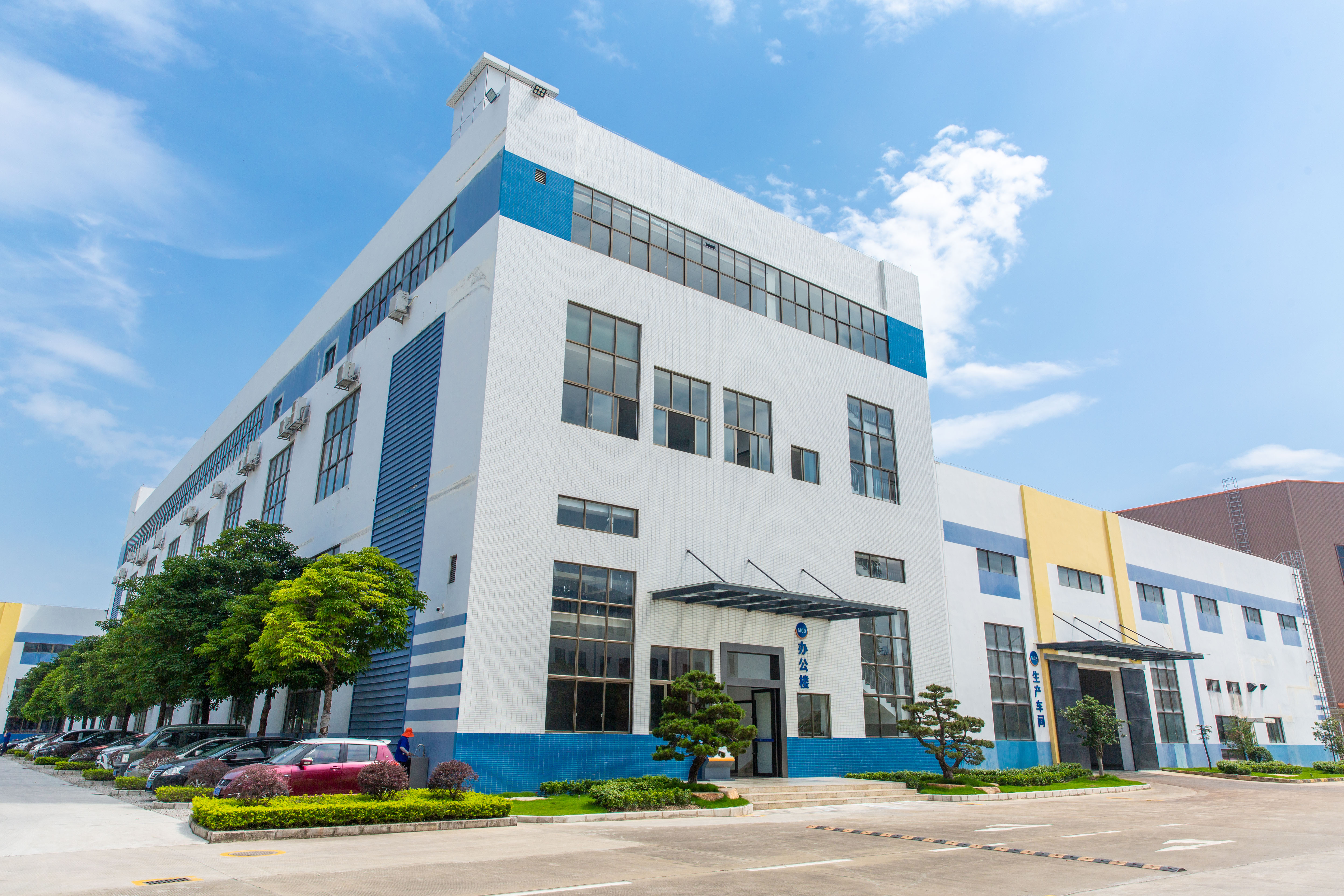
Series and customized builds are assembled and tested in-house, with 100% air tightness, noise and motor testing on every unit.
Next step. The full series list, ratio ranges and customization options are collected in the STARSHINE DRIVE brochure, which can be downloaded here: STARSHINE DRIVE product brochure (PDF). Series data and application details are also available at www.ssdreducer.com.
Have Questions or Need More Details?
Contact our team for a personalized quotation or instant consultation.
Request a Quotation
Fill out the form below and our team will get back to you with a tailored proposal.
WhatsApp Direct Chat
Prefer to chat in real-time? Message us on WhatsApp for instant assistance & quick answers.
- Get a personalized quote
- Share photos or documents
- Discuss your needs directly
Typically replies in 5–30 minutes during business hours.