RV Series Worm Gearbox vs Industry Customized Products: Food & Beverage Washdown Decision
RV Series Worm Gearbox vs Industry Customized Products: Food & Beverage Washdown Decision
Food and beverage plants do not select a reducer on torque alone. Fillers, cappers, conveyors, mixers, sterilizers, freezers, labelers, packers and palletizers live inside a cleaning culture: daily washdown, alkaline and acid cleaning agents, humid air in the fill hall, oil and sugar splash, and temperature swings between a pasteurizer and a freezer. Under those conditions the real question is not “worm gearbox or custom gearbox”. It is narrower: which washdown-relevant requirements can the standard RV Series Worm Gearbox already satisfy, and which ones move the project into the Industry Customized Products line of Starshine Drive?
The answer turns on where the drive physically sits, how the machine is cleaned, and what the specification says about lubricant, ingress protection, surface material and noise. Get those three things straight and the choice usually makes itself.
Decision in one line: if the drive sits in the direct washdown zone and the machine specification lists food-grade lubricant, a high IP rating, corrosion resistance against acid and alkaline cleaning agents, and stainless steel material, treat it as a customized drive project. If the drive is a light-to-medium duty unit outside the spray zone, where compact size, wide ratio coverage and self-locking at i≥60 matter more than hygiene surface requirements, the standard RV Series Worm Gearbox is the faster and more repeatable path.
Problem Definition: What Washdown Duty Actually Demands from a Reducer
A reducer on a packaging line is not a reducer in a machine shop. The food and beverage application profile used by Starshine Drive documents the working conditions as continuous operation, a humid environment in the cleaning area, high or low temperatures at some stations (sterilization and freezing), variable load, and the presence of oil and sugar splashes. Operating modes span all-weather continuous operation, intermittent operation, variable-speed operation and frequent start-stop.
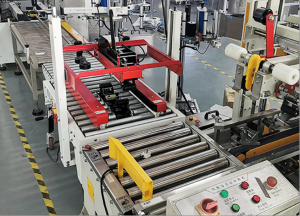
The requirement list for this scenario is specific, and it is the list that separates the two options:
- High hygienic standard – food-grade lubricant and easy-to-clean construction
- Waterproof and moisture-proof – a high IP rating
- Corrosion resistance – against acid and alkaline cleaning agents
- Low noise – for stations where operators stand next to the machine
- Stainless steel material – for rust prevention
- Compact design, easy maintenance and long service life – because access for inspection is often limited in a fill hall
The driven equipment is equally well defined. The product’s role in this scenario is to transmit power, reduce speed and increase torque for fillers, cappers, conveyor belts, mixers, sterilizers and labelers, achieving precise motion control for material conveying, filling, capping, sterilization, labeling, packing and palletizing. Matching equipment includes the filler, capper, conveyor belt, mixer, sterilizer (pasteurization and high temperature), freezer, labeler, packer, palletizer and cleaning equipment.
Two consequences follow. First, the reducer is never evaluated alone — it is one link in a drive chain that includes the motor and the speed control device. Second, hygiene requirements are not cosmetic. A drive that fails on sealing or corrosion forces unplanned washdown stops, and unplanned stops are what food plants actually lose money on.
Industry Background: Why Washdown Drives Keep Moving Up the Specification
Reducer demand tracks industrial automation investment. The global gear reducer market is valued at approximately USD 1.96 billion in 2026 and is projected to reach USD 2.58 billion by 2035, according to Business Research Insights. Grand View Research reports that Asia Pacific dominated the industrial gearbox market with a 40.8% revenue share in 2025, which is consistent with where food and beverage line building has concentrated. Indastra projects planetary gearboxes as the fastest-growing segment, with a CAGR of 6.2% through 2030 driven in part by robotics and automated handling.
Against that backdrop, machinery design requirements are tightening. EN ISO 12100:2010 sets out the general principles for risk assessment and risk reduction in machinery design, including gear reducers, and it is the baseline that hygiene-driven design decisions sit on top of. In practice, this means a food plant buyer is not only checking whether a gearbox turns; the buyer is checking whether the drive can be specified, documented and maintained inside a regulated production environment.
For Guangdong Starshine Drive Co., Ltd., an industrial transmission manufacturer founded in 1965 and based in the Sanshui District of Foshan City, Guangdong Province, this shift is visible in the product structure. The company runs a product line spanning NCJ series gear reducers, R/S/K/F series high-precision gear reducers, RV series worm gear reducers, SP series planetary reducers, SI series industrial gearboxes, SNKG series gear reducers, JWB-X series mechanical stepless variators, B/JXJ series cycloidal pinwheel reducers and the XGK series hypoid gear reducers. Food and beverage is one of the industries those products are applied to, and washdown duty is where the difference between a catalogue unit and an engineered unit becomes financially material.
Detailed Solution: Comparing the Two Routes on Real Requirements
Option A — RV Series Worm Gearbox: the standard platform
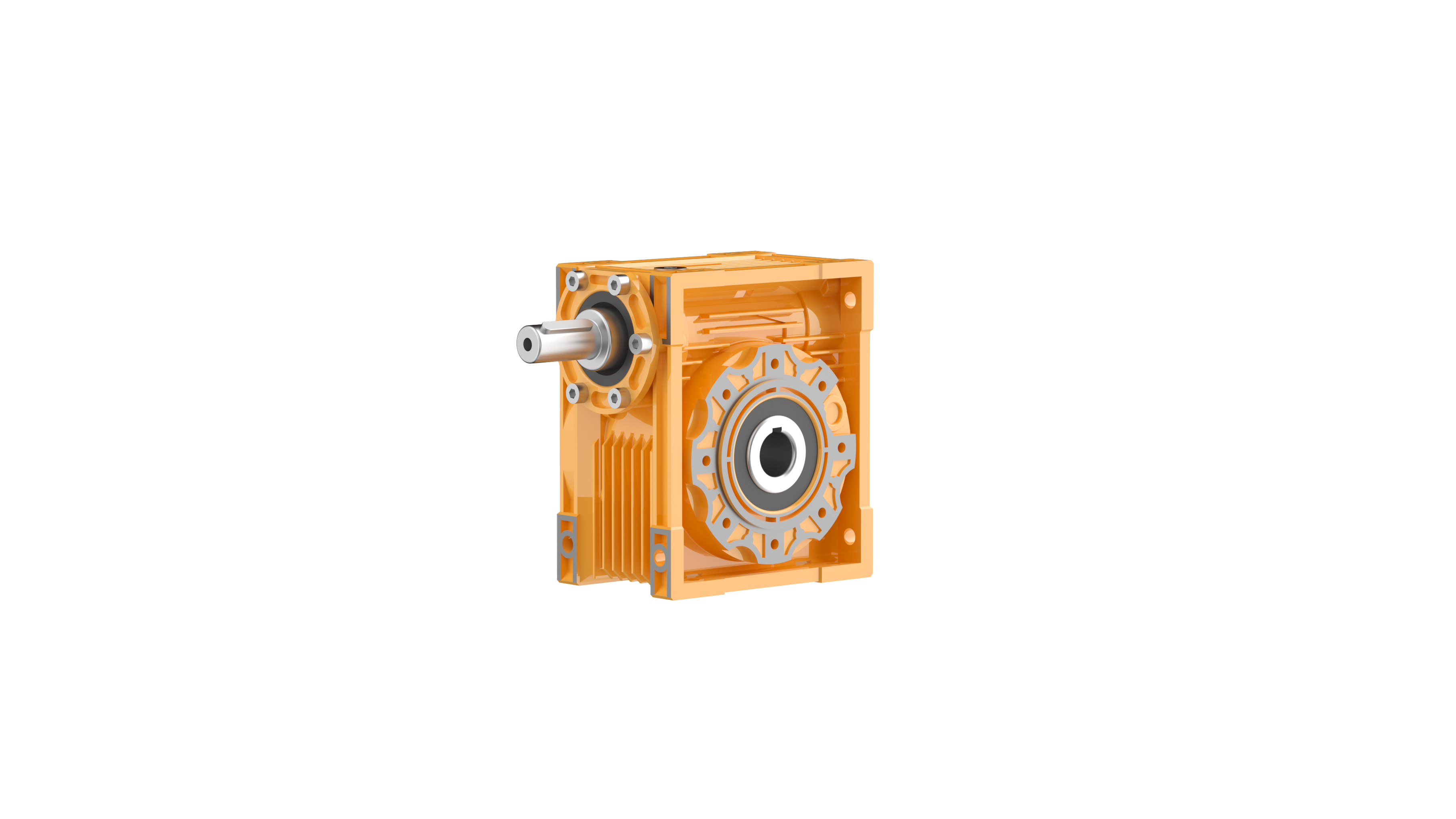
The RV Series Worm Gearbox is a standard worm gearbox. Its documented construction uses superior alloy steel (20CrMnTi) with special heat treatment for the worm shaft, giving high hardness, and a patented premium KK alloy copper worm wheel with excellent wearability. Ratio coverage is wide: a single stage can reach 100, and a double stage can reach 10,000. At i≥60 the unit provides a self-locking function, which is a genuinely useful property on holding and positioning duty. Lubrication is handled with synthetic worm gear special lubricating oil, specified to ensure transmission efficiency and improve service life. The housing is aluminium.
The same catalogue lists the standard RV Series application fields as stage equipment, door operator and electric power. That is an important honesty check for a food plant buyer: the standard configuration as documented is not presented as a washdown, food-grade or corrosion-resistant build. Where an RV unit is used on a food line, it belongs in positions that are light to medium duty, outside the direct spray zone, or in the dry side of the plant — for example conveyor transfer points, indexing positions where self-locking helps hold position, and small mechanisms where aluminium housing weight and compactness are advantages.
Option B — Industry Customized Products: engineered around the cleaning regime
Industry Customized Products is the customizable gear reducer line, built on cast iron and alloy steel and configured to the application. The documented customized types include a bucket elevator customized reducer, a ceramic kiln dedicated gearbox, a high-temperature resistant custom reducer, an explosion-proof customized gearbox, and — the type that matters most in a washdown conversation — a corrosion-resistant tailored gearbox. Food-processing machinery is explicitly listed among the main application industries of this family, alongside packaging machinery, conveyor systems, logistics and warehousing, textile machinery and printing machinery.
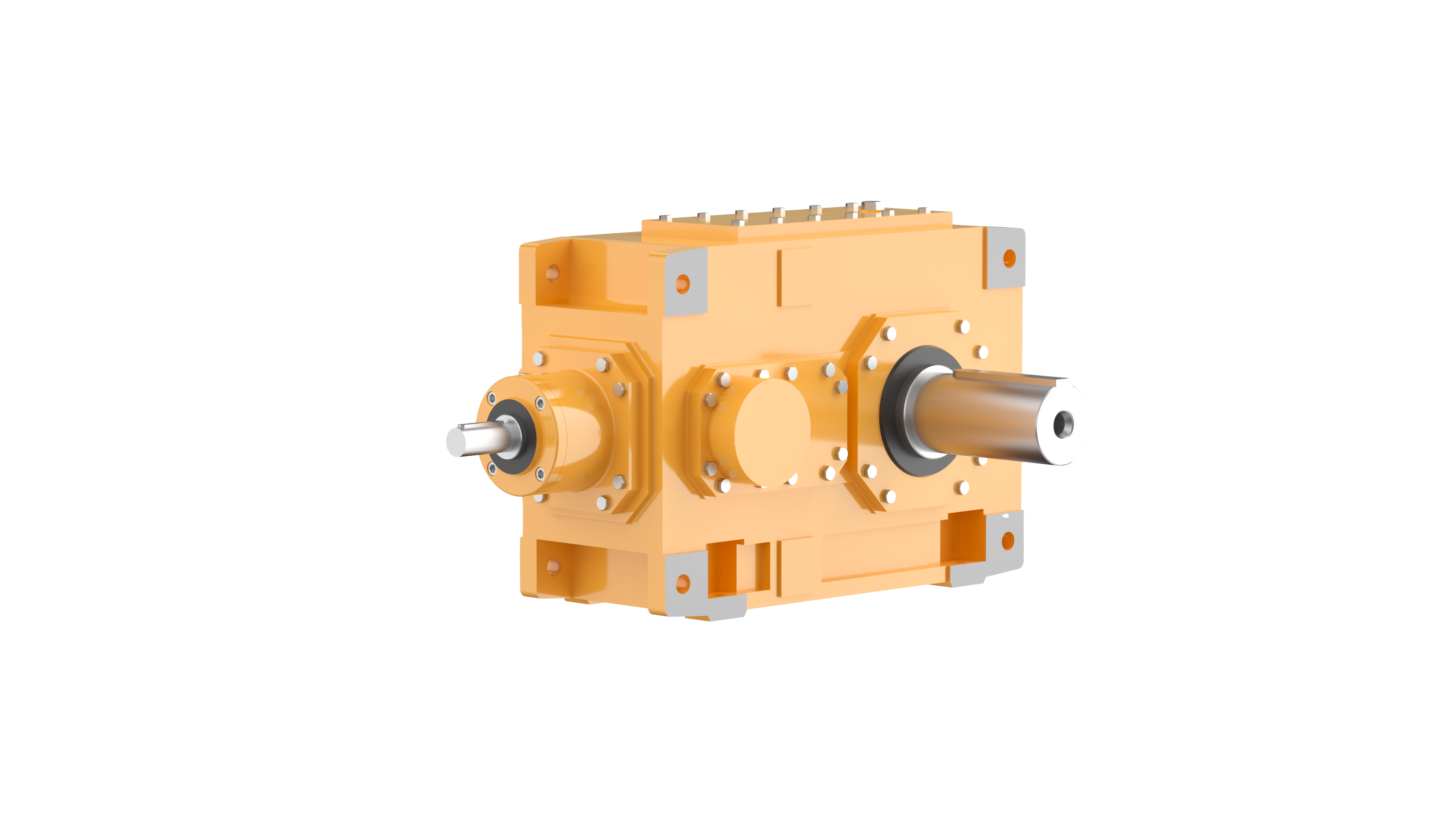
The customization scope is defined rather than open-ended: reduction ratio, torque, shaft size, installation dimensions, housing material and surface finish can all be set, and non-standard modification is supported against customer drawings. Practically, this is where the washdown requirement list is answered — housing and surface treatment chosen for the cleaning agent in use, sealing and protection level set against the spray pattern, mounting geometry matched to an existing machine envelope, and lubrication specified together with the hygiene requirement.
The supporting chain: motor, converter and accessories
Washdown performance is decided by the whole drive package, not only the gearbox. Starshine Drive supplies Reducer Components and Drive System Accessories covering integrated servo motors, three-phase asynchronous motors, frequency converters and permanent magnet synchronous motors. Materials here are also configurable: motor housings in die-cast aluminium or cast iron, motor shafts in 45# steel or 40Cr alloy steel, and inverter housings in engineering plastic or metal. Crucially for food plants, customized materials such as corrosion-resistant and high-temperature-resistant options are available for special environments, and power, voltage, speed and control mode can be configured to match the reducer and the application.
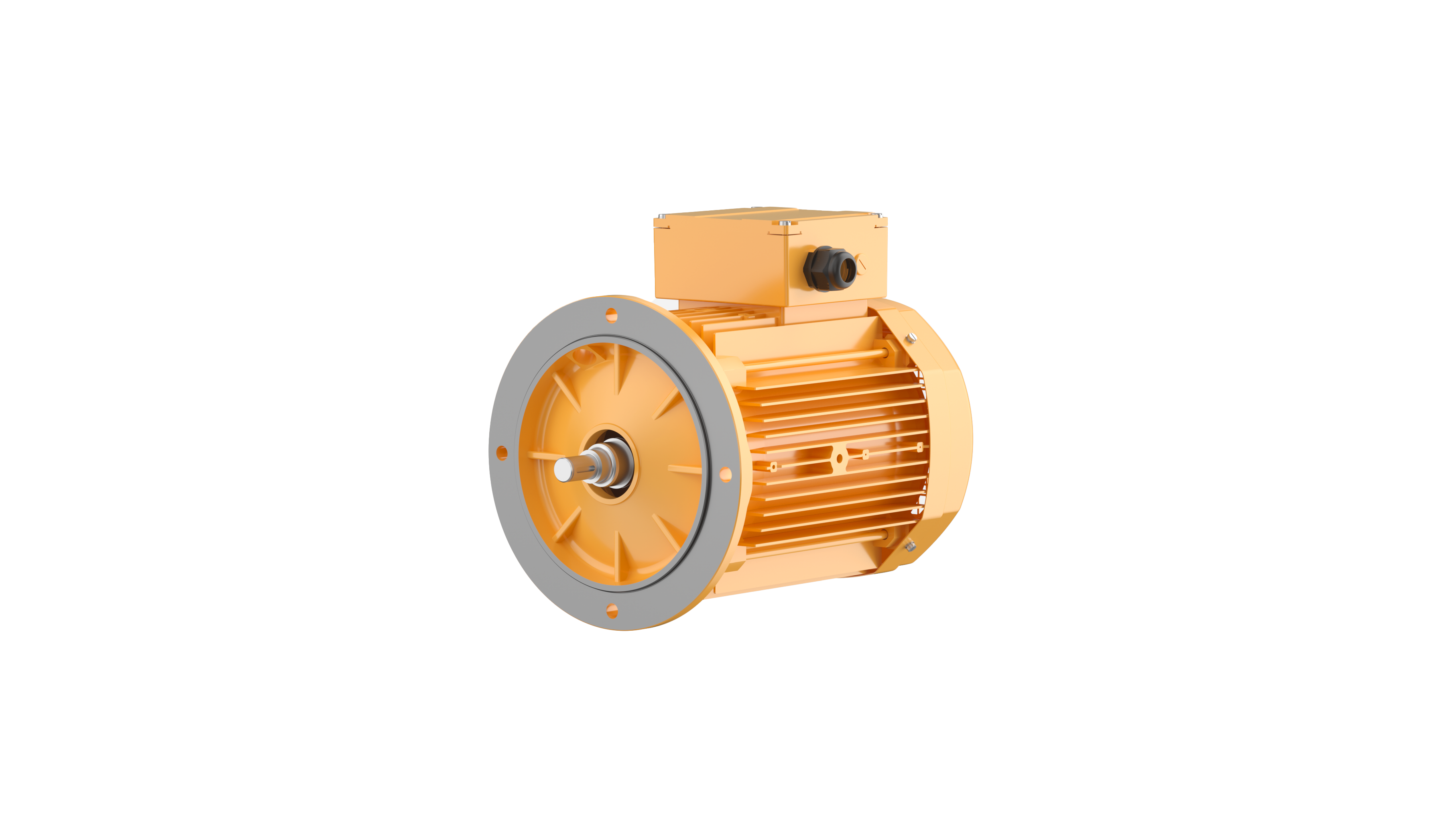
Two adjacent platforms are worth knowing because they often sit next to an RV or customized unit on the same line. The R/F/K/S Series Helical Gearmotors run a single-stage efficiency above 96%, with a single-stage ratio range of 1.3–289.74, 20CrMnTi gears, carbonitriding hardening at HRC55–65, gear grinding to grade 6 accuracy, and a high-strength cast iron housing. The NCJ Series Helical Gearmotor delivers 92%–96% efficiency and uses a special wide-frequency high-performance motor that works well under 20 Hz–60 Hz full loading, with special lubricating oil supporting 20,000 hours of normal use. Where a food line runs true continuous duty at high efficiency, these helical platforms are frequently the better mechanical match than a worm unit — and both can be wrapped into a customized configuration when the environment demands it.
Step-by-Step Breakdown: How to Choose Between Standard and Customized
- Define the cleaning regime first. List every cleaning agent used on the machine, its concentration and its temperature, plus whether cleaning is spray, foam, manual wipe-down or immersion. Acid and alkaline cleaning agents are the reason corrosion resistance is a requirement in the first place, and this list determines whether a corrosion-resistant tailored gearbox is needed at all.
- Locate the drive relative to the spray. A unit in a humid room and a unit inside the direct spray envelope are different specifications. The food and beverage requirement profile calls for waterproof and moisture-proof construction at a high IP rating — confirm the actual spray pattern on the machine before writing that requirement into the purchase order.
- Map the duty cycle honestly. The scenario documentation lists continuous operation, intermittent operation, variable-speed operation and frequent start-stop as coexisting modes. Record starts per hour, running hours per shift, and the slowest and fastest operating points. Frequent start-stop is a torque event, not a speed event, and it drives both the reducer selection and the motor and converter configuration.
- Calculate torque and ratio at the worst point. Take the peak torque at start-up and at the lowest speed, not the average. For a worm platform, check whether the required ratio falls inside the RV range (single stage up to 100; double stage up to 10,000) and whether i≥60 self-locking is useful for holding a position when the motor is off.
- Match materials and lubrication to the hygiene specification. Decide which surfaces must be stainless steel for rust prevention, which housing material suits the cleaning agent, and whether food-grade lubricant is required. The RV Series is documented with synthetic worm gear special lubricating oil; where food-grade lubricant and stainless steel material are specified, that requirement belongs to the customized scope.
- Check noise against the operator station. Low noise is a stated requirement for this scenario, which matters most on labelers, cappers and small conveyors where staff stand within arm’s reach. Noise is verified in production — the manufacturing line integrates 100% online noise testing — but the target value should still be written into the specification.
- Confirm the installation envelope and maintenance access. Compact design and easy maintenance are both listed requirements. Ask where the oil fill and drain points end up after installation, and how a technician reaches them without dismantling guarding.
- Agree purchasing terms and acceptance criteria before release. Minimum order quantity, lead time, testing records and documentation should be fixed at the same time as the technical specification, not after the drawing is approved.
Use Cases: Matching the Drive to the Station
Dry-side conveyors and palletizer infeed
Conveyors moving cases between the dry end of the plant and the packaging hall usually run at modest torque with predictable speed. A standard RV Series Worm Gearbox is a reasonable candidate here, particularly at higher ratios where self-locking at i≥60 helps hold a load on an incline when the motor is stopped.
Labelers and small cappers in the fill hall
These stations combine frequent start-stop with a low noise requirement and close operator proximity. Variable-speed operation is normal, so the drive package should be configured with a suitable motor and frequency converter. If the labeler head sits inside the washdown envelope, the housing material and protection level push the specification toward the customized route.
Mixers and blenders in humid areas with sugar and oil splash
Higher torque, continuous duty and a genuinely aggressive environment. Construction should be cast iron or alloy steel with corrosion-resistant treatment and a configuration that can be cleaned without trapping residue. This is the clearest case for a corrosion-resistant tailored gearbox from the Industry Customized Products line.
Sterilizers, pasteurizers and freezer transitions
Stations at the hot end and the cold end introduce temperature variation into the same production line. High-temperature resistant custom reducers and customizable motor and inverter materials for special environments are the relevant options; thermal behaviour should be discussed with the supplier rather than assumed.
Filling and packing lines running variable speed all day
Filler, packer and palletizer sections run variable-speed and all-weather continuous duty. Both reducer and drive electronics are specified together here, which is why the torque, ratio, control mode and enclosure requirements should be documented as one package before the quotation stage.
Comparison Table: RV Series Worm Gearbox vs Industry Customized Products
| Decision factor | RV Series Worm Gearbox (standard) | Industry Customized Products |
|---|---|---|
| Position in the range | Standard worm gearbox platform | Customizable gear reducers configured to the application |
| Worm / gear materials | Worm shaft in superior alloy steel (20CrMnTi) with special heat treatment; patented premium KK alloy copper worm wheel | Cast iron and alloy steel construction; corrosion-resistant tailored version documented |
| Housing material | Aluminium parts | Cast iron, alloy steel |
| Ratio coverage | Single stage up to 100; double stage up to 10,000 | Ratio set as a customization parameter |
| Self-locking | i≥60 with self-locking function | Not documented as a standard feature; specify per project |
| Lubrication | Synthetic worm gear special lubricating oil | Specified with the custom configuration, including food-grade lubricant where required |
| Washdown / hygiene adaptation | Not documented for food-grade lubricant, high IP rating or stainless steel material | Corrosion-resistant tailored gearbox within a scope that includes food-processing machinery |
| Documented application fields | Stage equipment, door operator, electric power | Food-processing machinery, packaging machinery, conveyor systems, logistics and warehousing, textile, printing, and more |
| Customization scope | Standard catalogue configuration | Reduction ratio, torque, shaft size, installation dimensions, housing material and surface finish; non-standard modification per customer drawings |
| MOQ | 1 unit | 1 unit |
| Lead time | Typically 7–20 days, depending on the product | 15–45 days for vertical customization |
| Monthly capacity | RV Worm Gearbox Series: 25,000 units/month | Customized series: 5,000 units/month |
| Quality control | 100% full-scale testing; 100% finished product inspection; regular reliability and durability testing | Same testing regime, applied to the customized build |
| Strongest fit | Light-to-medium duty, holding and positioning, dry or wipe-down positions | Direct washdown zones, hygiene-critical stations, corrosion and temperature risk |
Table footnote: all entries reflect documented product and capability facts. Lead times and capacities describe the standard series and the customized series respectively; final values are confirmed per order.
Green light rules. Stay standard when the drive is outside the washdown envelope, duty is light to medium, holding torque is useful, and the specification does not name food-grade lubricant, stainless steel surfaces or corrosion resistance. Move to customized when any one of those hygiene requirements appears, when temperature varies sharply across the station, when torque and start-stop intensity sit at the top of the range, or when the mounting envelope cannot be met by a catalogue unit.
Questions to Ask Before Approving Either Option
- Which cleaning agents, at what concentration and temperature, contact the drive area — and is cleaning spray, foam, manual wipe-down or immersion?
- Is the drive inside the direct spray envelope or only in a humid room, and what IP rating does that imply?
- Is food-grade lubricant specified, and how will lubrication points be reached for top-up and exchange without dismantling guarding?
- Which surfaces must be stainless steel, and which material certificates or surface specifications are required for handover?
- What is the real duty cycle — continuous, intermittent, variable-speed, frequent start-stop — and how many starts per hour in the worst case?
- What torque is needed at the slowest speed and at start-up, and what output speeds define the operating window?
- Is holding torque required with the motor de-energized, and does i≥60 self-locking cover it?
- What noise limit applies at the nearest operator station, and how will it be verified?
- What installation envelope and maintenance access are available for the drive package, including the motor and converter?
- What acceptance documentation will be provided — testing records, air tightness, noise and motor test data, reliability and durability testing — and what are the agreed MOQ and lead time?
FAQ
Does the RV Series Worm Gearbox meet food and beverage washdown requirements, including food-grade lubricant and a high IP rating?
The food and beverage application profile specifies food-grade lubricant, high IP rating, corrosion resistance, low noise, and stainless steel material. The standard RV Series Worm Gearbox is documented with a heat-treated 20CrMnTi worm shaft, a patented premium KK alloy copper worm wheel, aluminium housing parts, and synthetic worm gear special lubricating oil. Where a machine specification calls for a washdown-rated, corrosion-resistant build, that requirement sits inside the customized scope, which includes a corrosion-resistant tailored gearbox. Starshine Drive products comply with ISO, CE, and CCC standards.
What can be customized on a Starshine Drive reducer for a food line?
Customization covers reduction ratio, torque, shaft size, installation dimensions, housing material and surface finish, plus non-standard modification against customer drawings. The customized product family includes a bucket elevator customized reducer, ceramic kiln dedicated gearbox, high-temperature resistant custom reducer, explosion-proof customized gearbox, and corrosion-resistant tailored gearbox. Drive accessories such as motors and converters can also be supplied with corrosion-resistant or high-temperature-resistant materials, and power, voltage, speed, and control mode can be configured to match the reducer.
How do MOQ, capacity, and lead time compare between the two routes?
Minimum order quantity is 1 unit for both catalogue and customized supply. Monthly capacity is 25,000 units for the RV Worm Gearbox Series and 5,000 units for the customized series, alongside 7,000 units/month for R/F/S/K series helical gearmotors, 15,000 units/month for the NCJ Series, and 5,000 units/month for the JWB/JXJ Series. Lead time is typically 7–20 days depending on the product for catalogue series and 15–45 days for vertical customization.
What sample and acceptance testing is available before full production?
Every unit passes 100% full-scale testing and 100% finished product inspection, supported by regular reliability and durability testing. The production line integrates 100% online air tightness testing, 100% online noise testing, and 100% comprehensive motor testing. Because MOQ is 1 unit, a single sample unit can be ordered and evaluated before a production line is committed.
What lead time and after-sales support should a food plant plan for?
Catalogue series typically ship in 7–20 days depending on the product, while vertical customization runs 15–45 days. The assembly plant in Vienna, Austria supports localized assembly, warehousing and distribution, and technical service for the European market, shortening delivery cycles for European clients. After-sales support is delivered through remote after-sales support and local dealership services, backed by 10+ global assembly centres and 100+ dealer partners, with products and services reaching over 30 countries and regions. To start a sample or quotation request, contact jessica@xgcd.cn or WhatsApp +8615899805924.
Conclusion
The RV Series Worm Gearbox and the Industry Customized Products line are not competing answers to the same question. The RV platform answers a mechanical question — ratio, torque, compactness and self-locking — and does it with a heat-treated 20CrMnTi worm shaft, a patented premium KK alloy copper worm wheel and a wide ratio range from single stage up to 100 and double stage up to 10,000, with self-locking at i≥60. The customized line answers a specification question — cleaning agents, ingress protection, stainless steel surfaces, food-grade lubricant, temperature variation and mounting envelope — and it does that with cast iron and alloy steel construction, a corrosion-resistant tailored gearbox, and a customization scope that runs from reduction ratio and torque through shaft size, installation dimensions, housing material and surface finish.
For a food and beverage machine, the deciding evidence is almost always the cleaning regime plus the acceptance criteria. Document the agents, the spray envelope, the duty cycle, the torque peaks, the noise target and the maintenance access. Then match those to the options above. Whichever route the station takes, the specifications, the testing records and the lead time should be settled before the purchase order, not after.
Next step: evaluate a drive on your own machine
Starshine Drive accepts sample and quotation requests from a single unit (MOQ 1 unit) so a washdown configuration can be evaluated before a line is committed. Share the cleaning agents, duty cycle, torque and noise target, and the team will match the configuration to the station.
Website: www.ssdreducer.com | Email: jessica@xgcd.cn | Phone / WhatsApp: +8615899805924
Address: No. 10 Huijin Industry Park, Baini Town, Sanshui District, Foshan City, Guangdong P.R., China
Product catalogue download: Starshine Drive product catalogue (PDF)
Have Questions or Need More Details?
Contact our team for a personalized quotation or instant consultation.
Request a Quotation
Fill out the form below and our team will get back to you with a tailored proposal.
WhatsApp Direct Chat
Prefer to chat in real-time? Message us on WhatsApp for instant assistance & quick answers.
- Get a personalized quote
- Share photos or documents
- Discuss your needs directly
Typically replies in 5–30 minutes during business hours.