
Which Reducer Works Where? A Project-Fit Selection Guide
Which Reducer Works Where? A Project-Fit Selection Guide
An industrial reducer, also called a gear reducer or speed reducer, must do more than deliver a calculated ratio. It must survive the environment, tolerate the operating pattern, and match the driven machine. This scenario-based guide helps project buyers match reducer families and specification features to real industrial working conditions. Whether you evaluate a worm gear reducer, planetary gear reducer, helical gear reducer, coaxial reducer, or custom gearbox, the first step is not the part number; it is the application profile.
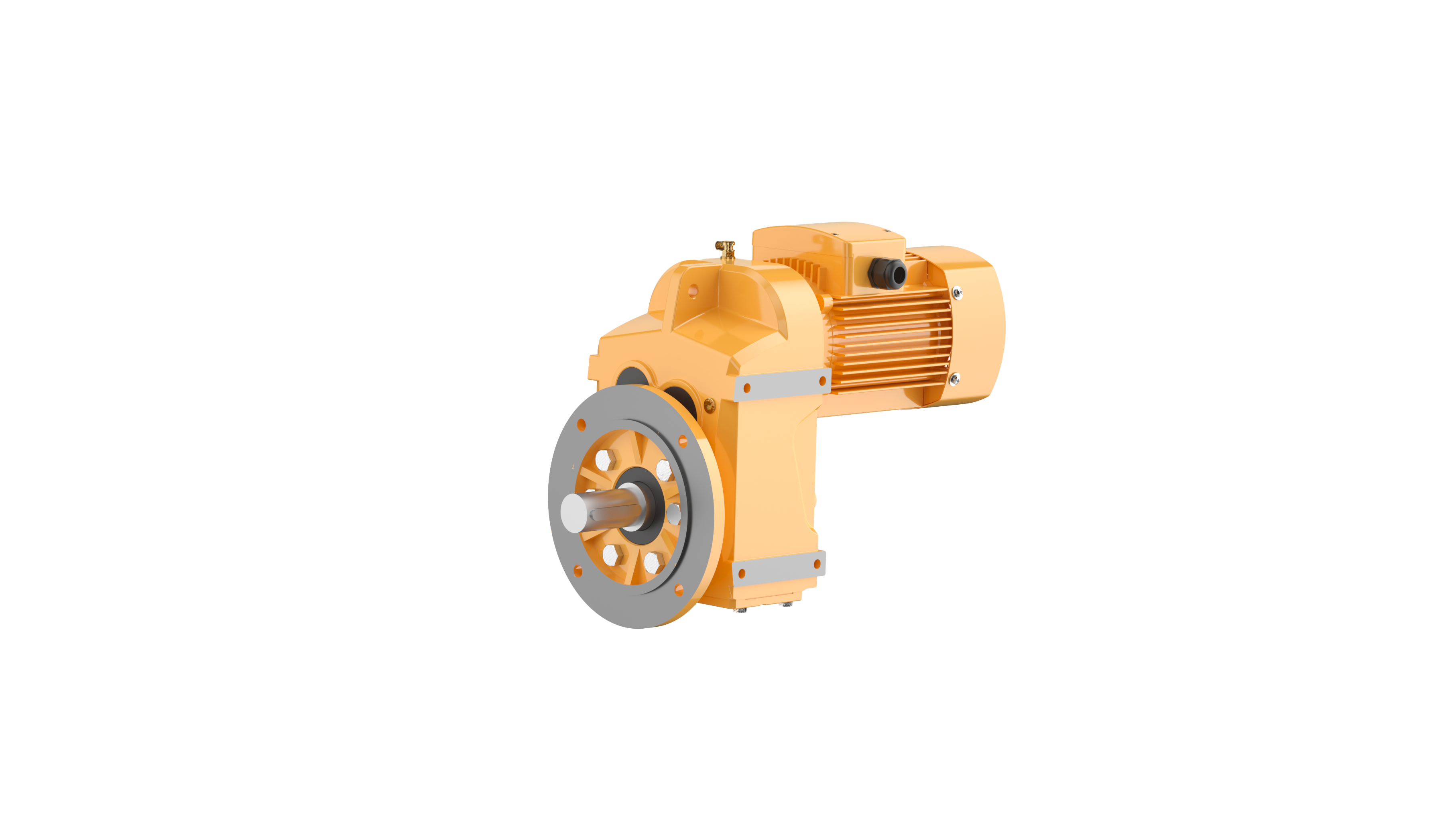
F series helical geared motor supports continuous industrial applications.
The Core Problem: Why Catalogue Data Is Not Enough
Many projects choose a reducer by torque or ratio, then discover that the real failure mode is not a calculated number but heat, dust, humidity, washdown chemicals, or an unexpected duty cycle. A gear unit can fail early if its lubrication, sealing, material, or mounting geometry is not suited to the surrounding process. Gear reducers are installed inside production lines where conditions vary widely: a glass line may run continuously beside a furnace, a food line may be washed down with caustic cleaners, and a lithium battery dry room may demand low heat generation and cleanroom-friendly sealing. The same catalogue specification can behave differently in each situation.
Industrial Reducer Market Context
According to Business Research Insights, the global gear reducer market is valued at approximately USD 1.96 billion in 2026 and is projected to reach USD 2.58 billion by 2035. Grand View Research reports that Asia Pacific held a 40.8 percent revenue share in the industrial gearbox market in 2025. A separate market outlook from Indastra identifies planetary gearboxes as one of the fastest-growing segments, supported by robotics and wind energy demand. This trend is important, but automation plants still depend on mature mechanical families such as helical gear reducers, worm gear reducers, helical bevel gear reducers, coaxial reducers, cycloidal reducers, and mechanical variators. The practical question is not which type is the most modern; it is which type fits the machine, the site, and the duty cycle.
A Broad Product Platform Makes Application Matching Practical
Starshine Drive, whose legal entity is Guangdong Starshine Drive Co., Ltd., is an industrial transmission manufacturer with roots in a mould factory established in 1965. Its production base in Foshan, Guangdong, covers about 53,333 square meters, employs nearly 400 people, and includes an R&D team of 40 engineers. The company states that its main export markets are Southeast Asia, Europe, and North America, and that it has established an assembly and service plant in Vienna, Austria. Its product range covers more than a dozen gearbox families, including the NCJ series helical gearmotors, R/S/K/F series high-precision gear reducers, RV series worm gearboxes, SP series planetary reducers, SI series industrial gearboxes, SNKG series gear reducers, JWB-X series mechanical variators, B/JXJ series cycloidal pinwheel reducers, and XGK series hypoid gear reducers. The company also supplies integrated drive components such as servo motors, three-phase asynchronous motors, permanent magnet synchronous motors, and frequency converters.
Three product families illustrate how application data shapes selection:
R/F/K/S series helical gearmotors: These high-precision helical gear reducers use superior alloy steel 20CrMnTi for gears, with carburizing hardening reaching HRC 55-65 and gear grinding accuracy to grade 6. Their single-stage efficiency is reported above 96 percent, and the single-stage ratio range extends from 1.3 to 289.74. They are typically considered for industries such as textiles, logistics, new energy, and grain and oil processing.
NCJ series helical gearmotors: This series is designed for efficiency between 92 and 96 percent, with the same 20CrMnTi alloy steel gear material and hardness range. The motor is a special wide-frequency high-performance motor that works under full loading at 20-60 Hz. Its special lubricating oil is stated to meet 20,000 hours of normal use, and certain NCJ models can replace cycloid gearbox installations for energy-saving upgrades.
RV series worm gearboxes: These are compact right-angle worm gear reducers with aluminum parts. The worm shaft uses alloy steel heat treatment, while the worm wheel uses patented premium KK alloy copper for wear resistance. The ratio can reach 100 in a single stage and 10,000 in two stages, and ratios of approximately 60 or higher provide a self-locking function. Typical listed applications include stage equipment, door operator systems, and electric power installations.
Six-Step Application-Fit Framework
Use the following sequence when evaluating any reducer for a project.
- Define the driven equipment and motion control objective. Identify whether the reducer drives a conveyor, mixer, sorter, lifting device, roller table, agitator, or specialized machine. Each creates different acceleration, holding, and positioning requirements.
- Classify the operating profile. Check if the process is all-weather continuous, intermittent, variable-speed, frequent start-stop, or high-precision positioning. This directly influences gear material, lubrication, motor characteristics, and service factors.
- Assess the site environment. List visible and hidden risks: high temperature, high dust, paper dust, glass debris, acid-base solvents, humidity, washdown water, low-humidity dry rooms, or electrolyte exposure. Then define the required protection class and special materials.
- Select the mechanical architecture. For continuous high-efficiency duty, helical gearmotor families such as R/F/K/S or NCJ are often considered. For compact right-angle layouts with high-ratio and possible self-locking conditions, an RV worm gearbox may be appropriate. For precision positioning in clean environments, planetary or high-precision helical reducers deserve evaluation. For unusual machine geometry or severe conditions, custom engineered reducers may be required.
- Confirm supporting equipment and integration. A reducer rarely works alone. Match it with the correct motor, inverter, mounting flange, hollow shaft, torque arm, or control system. Many food and logistics lines combine helical gearmotors with servos or frequency converters to achieve the required control.
- Validate supplier capability. Ask about compliance, testing, lead time, and customization ability. The supplier should be able to state which quality checks are performed and whether sample validation is possible before mass production.
How Reducers Fit Real Industry Scenarios
The following industry scenarios show why application-specific thinking matters.
Application Comparison Matrix
The table below summarizes how typical operating profiles connect to reducer selection criteria. It is a starting point, not a substitute for a load calculation.
| Industry scenario | Operating profile | Key condition or requirement | Reducer options to evaluate |
|---|---|---|---|
| Glass processing | Continuous, high temperature, high dust | High-temperature resistance, dust protection, wear resistance | R/F/K/S series, customized reducers |
| Food and beverage | Continuous, humid, frequent start-stop | Food-grade lubricant, high IP, corrosion resistance, low noise | R/F/K/S series, drive system accessories |
| Textile | Continuous, high temperature, acid-base solvents | Corrosion resistance, moisture-proof, heat radiation adaptability | NCJ series, R/F/K/S series |
| Woodworking | Continuous, high dust, variable load | Low noise, high dust protection, compact design | R/F/K/S series, customized products |
| Logistics and sorting | Continuous, variable, frequent start-stop | Low noise, positioning accuracy, reliability | NCJ series, R/F/K/S series |
| Corrugated cardboard | Continuous, paper dust, some high temperature | Low noise, high dust protection, compact design | R/F/K/S series |
| Grain and oil | Continuous, high dust, variable load | Sealing, explosion-proof consideration, wear resistance | NCJ series, R/F/K/S series |
| Ceramics | All-weather continuous, kiln heat, humid glazing areas | High dust protection, waterproofing, high-temperature resistance | NCJ series, R/F/K/S series |
| Lithium battery | Dry-room environment, continuous, high-precision positioning | Sealing, low heat, high precision, cleanroom compatibility | R/F/K/S series, NCJ series |
| Stage equipment | Intermittent, limited installation space | Ultra-low noise, smooth operation, high positioning accuracy | RV worm gearbox, NCJ series |
Customization, Validation, and Lead Time Considerations
Not every project fits a standard stock unit. Starshine Drive supports vertical customization of reduction ratio, torque, shaft size, installation dimensions, housing material, and surface finish, including non-standard modifications based on customer drawings. OEM and ODM work is available. In this manufacturing setup, the minimum order quantity for samples and custom validation is one unit. Finished products are verified through full-scale testing and finished product inspection; the company also states that its products comply with ISO, CE, and CCC compliance frameworks.
Delivery planning depends on whether the configuration is standard or customized. For standard product families, quoted lead times often range from 7 to 20 days depending on the product. For customized series, lead times typically range from 15 to 45 days depending on scope. The overall production base reports an annual capacity of up to 500,000 units or sets, supported by testing lines that include 100 percent online air tightness testing, 100 percent online noise testing, and 100 percent comprehensive motor testing.
Frequently Asked Questions
Which industry standards should a reducer meet for a new project?
According to the manufacturer profile, Starshine Drive products comply with ISO, CE, and CCC compliance frameworks. Project-specific requirements should be checked separately. For example, a food processing line may require food-grade lubricant, high IP rating, corrosion-resistant surfaces, or stainless steel material. A dusty grain or corrugated line may require sealing and explosion-proof consideration. Always confirm the applicable standard with the supplier before ordering.
Can a reducer be customized for a non-standard mounting dimension or duty?
Yes. Starshine Drive supports vertical customization covering reduction ratio, torque, shaft size, installation dimensions, housing material, and surface finish. Non-standard modifications can be developed from customer drawings. OEM and ODM configurations are available, and the minimum order quantity is one unit, which makes project validation practical before full production.
Should I choose a worm gear reducer or a helical gear reducer for continuous operation?
For continuous high-utilization applications, helical gearmotor series typically offer higher efficiency. In Starshine Drive's data, the NCJ series helical gearmotor reaches 92 to 96 percent efficiency, and R/F/K/S helical gear reducers report single-stage efficiency above 96 percent. RV worm gearboxes offer compact right-angle construction, wide ratio, and self-locking behavior at ratios above approximately 60; their ratio can reach 100 in one stage or 10,000 in two stages. A worm gearbox can be suitable for space-limited or high-ratio installations, but helical units are more commonly selected for energy-sensitive continuous duty.
Can I test a sample before placing a large order?
Because the minimum order quantity is one unit, sampling is practical. Depending on product type, standard units may be quoted at 7 to 20 days lead time, while customized series may take 15 to 45 days. Each finished unit should pass full-scale inspection and testing before shipment. Sample testing is a useful first step for validating mounting, motor compatibility, noise, and process fit.
What delivery lead time should I plan for a custom reducer project?
Custom projects are usually quoted at 15 to 45 days depending on engineering scope, material, and testing requirements. Standard products often fall in the 7 to 20 day range depending on product family. To get a confirmed schedule, provide the driven equipment list, ratio, torque, mounting dimensions, and environment details. Starshine Drive can then confirm lead time based on the specific configuration.
Conclusion
Choosing a reducer for an industrial project is an application-fit exercise. Start by documenting the process, duty cycle, environment, driven equipment, and special requirements. Next evaluate reducer families and customization capabilities against those conditions. A high-precision helical gearmotor may be the right answer for a food line; an RV worm gearbox may be better for a compact stage lift; a custom engineered solution may be needed for severe glass or ceramic heat and dust. The stronger the application-to-product match, the lower the risk of early failure, unplanned downtime, and high operating cost.
For a complete reference, download the Starshine Drive product catalogue and compare gear reducer series before your next project discussion.
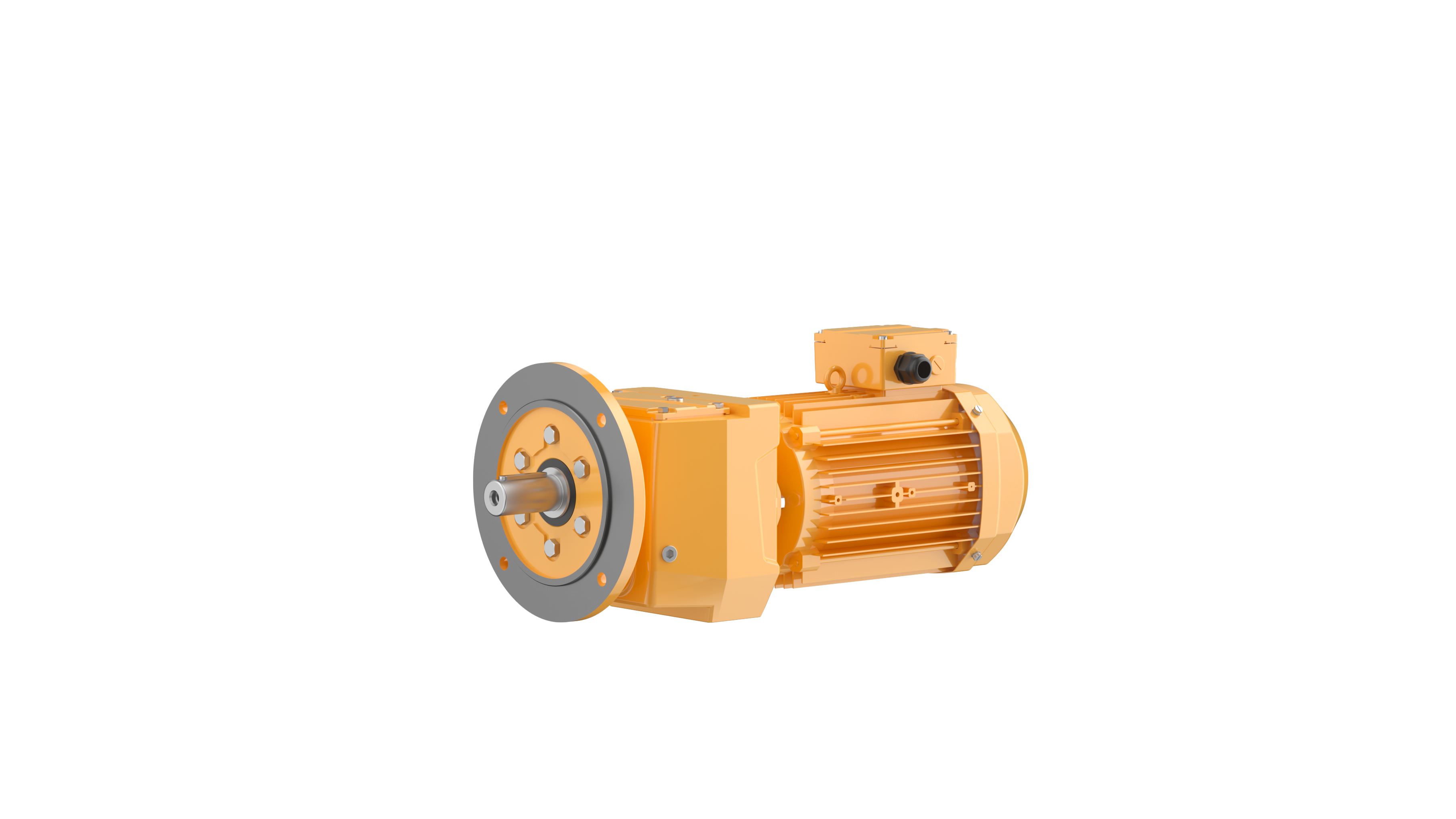
For a project-specific review, contact Starshine Drive with your driven equipment list, operating conditions, and required speed or torque. The engineering team can help identify whether a standard reducer or a customized gearbox is the better choice for your installation.
Visit www.ssdreducer.com or email jessica@xgcd.cn to start the evaluation.
Have Questions or Need More Details?
Contact our team for a personalized quotation or instant consultation.
Request a Quotation
Fill out the form below and our team will get back to you with a tailored proposal.
WhatsApp Direct Chat
Prefer to chat in real-time? Message us on WhatsApp for instant assistance & quick answers.
- Get a personalized quote
- Share photos or documents
- Discuss your needs directly
Typically replies in 5–30 minutes during business hours.