REDUCER Application Guide: Gearmotors for Hot, Humid Textile Dyeing Lines
A gearmotor on a textile dyeing line works in one of the harshest drive environments in light industry: continuous heat, saturated humidity, acid and alkali solvents, and radiant heat from nearby drying or fixation equipment, all while holding a steady surface speed on wet fabric. This guide explains how to match REDUCER helical, worm and NCJ gearmotors, together with customized high-temperature-resistant and corrosion-resistant gearboxes, to textile machinery and to printing and dyeing line automation upgrade projects. Every product statement below is taken from Starshine Drive product records and application data; where a value is not documented, this guide says so instead of filling the gap.
The short answer
On a hot, humid dyeing line, match the gearmotor in this order: the duty mode of the actuator, then the environment, then ratio and torque, then the motor and speed control, then maintenance access. For that sequence, the documented drive set is:
- R/F/K/S series helical gearmotors for the widest documented ratio spread and a single-stage efficiency of more than 96%.
- NCJ series helical gearmotors where line speed must vary, because the matched motor is rated for full-load operation from 20 Hz to 60 Hz.
- RV series worm gearboxes where a high ratio is needed in few stages, with self-locking at i≥60.
- Customized gearboxes and drive components where high-temperature-resistant or corrosion-resistant construction, non-standard shafts or special mounting dimensions are required.
Why a dyeing line is a hard duty for any gearmotor
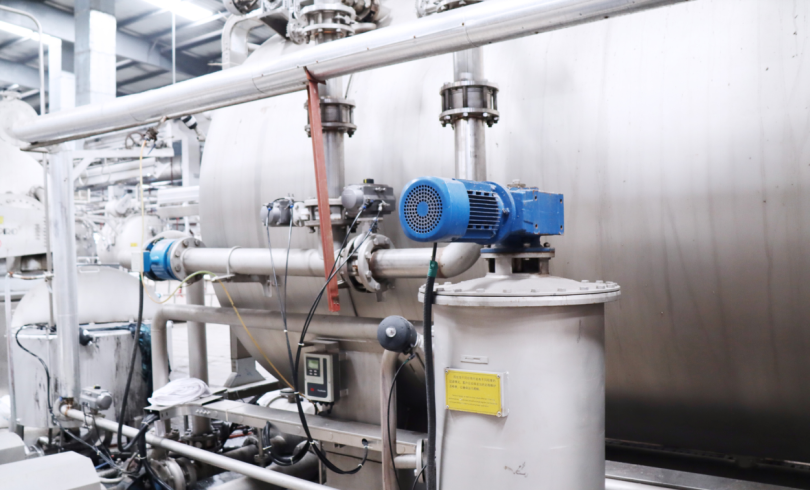
The duty is not one load case but several stacked on the same machine. Starshine Drive's textile application record describes the working condition as a high-temperature and humid environment, continuous operation, the presence of acid-base solvents from the dyeing process, and the influence of heat radiation. The same record lists three operating modes for the line: all-weather continuous operation, intermittent operation and variable-speed operation. A gearmotor therefore has to be specified for the worst combination that genuinely occurs, not for the nominal running point alone.
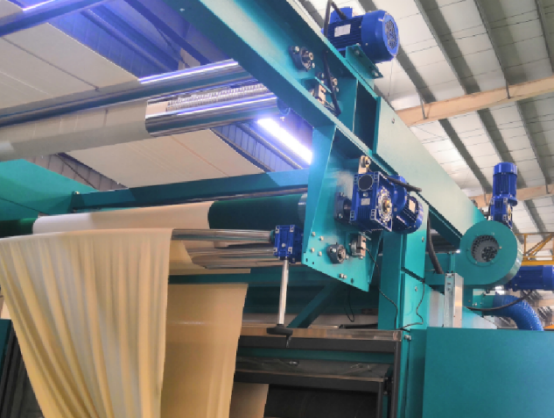
The mechanical job is defined with equal precision in that record: power transmission, speed reduction and torque increase for driving cloth guide rollers, pad rolls and other actuators, delivering precise motion control for fabric washing, dyeing, folding and hair removal. The equipment the drive set supports is listed as cotton rollers, cloth guide rollers, washing machines, dyeing machines, wide rollers, hair removal devices and X-Y plaiters. Because a single line contains all of these, one upgrade project usually involves several drive positions with different duty profiles rather than one repeated gearbox.
The requirement list in the same record is the part buyers most often under-specify: high temperature resistance, corrosion resistance against acid-base solvents through strong anti-corrosion paint, moisture-proofing, adaptability to heat radiation, long service life and easy maintenance. Three of these are surface and sealing requirements rather than gear-rating requirements, which means finish and protection belong in the purchase specification, not only in the torque calculation.
Industry background: why this is mostly a retrofit question
Starshine Drive frames the textile scenario around three project types: textile machinery manufacturing, printing and dyeing production line automation upgrade, and equipment retrofit projects. That framing changes the selection logic. A new machine can be designed around the drive, while a retrofit must fit an existing shaft height, mounting footprint, available space and existing control cabinet. In practice, the constraint list on a retrofit is longer than the performance list.
For category context only, Business Research Insights valued the global gear reducer market at approximately USD 1.96 billion in 2026 and projected USD 2.58 billion by 2035 (source: Business Research Insights, Gear Reducer Market report, 2026). That is a category-level estimate covering all industries; it is not used here to size any textile segment, and it should not be read as a forecast for dyeing machinery specifically.
What the supplied data does establish is the intended drive set. The textile application record links the scenario to R/F/K/S series helical gearmotors, NCJ series helical gearmotors and industry customized products, which is the combination this guide works through below.
The four drive options and what the documentation actually states
Each family below is described only by documented characteristics. Where a value is missing from the product record, that is stated plainly, because an unstated value must be requested from the model datasheet rather than assumed.
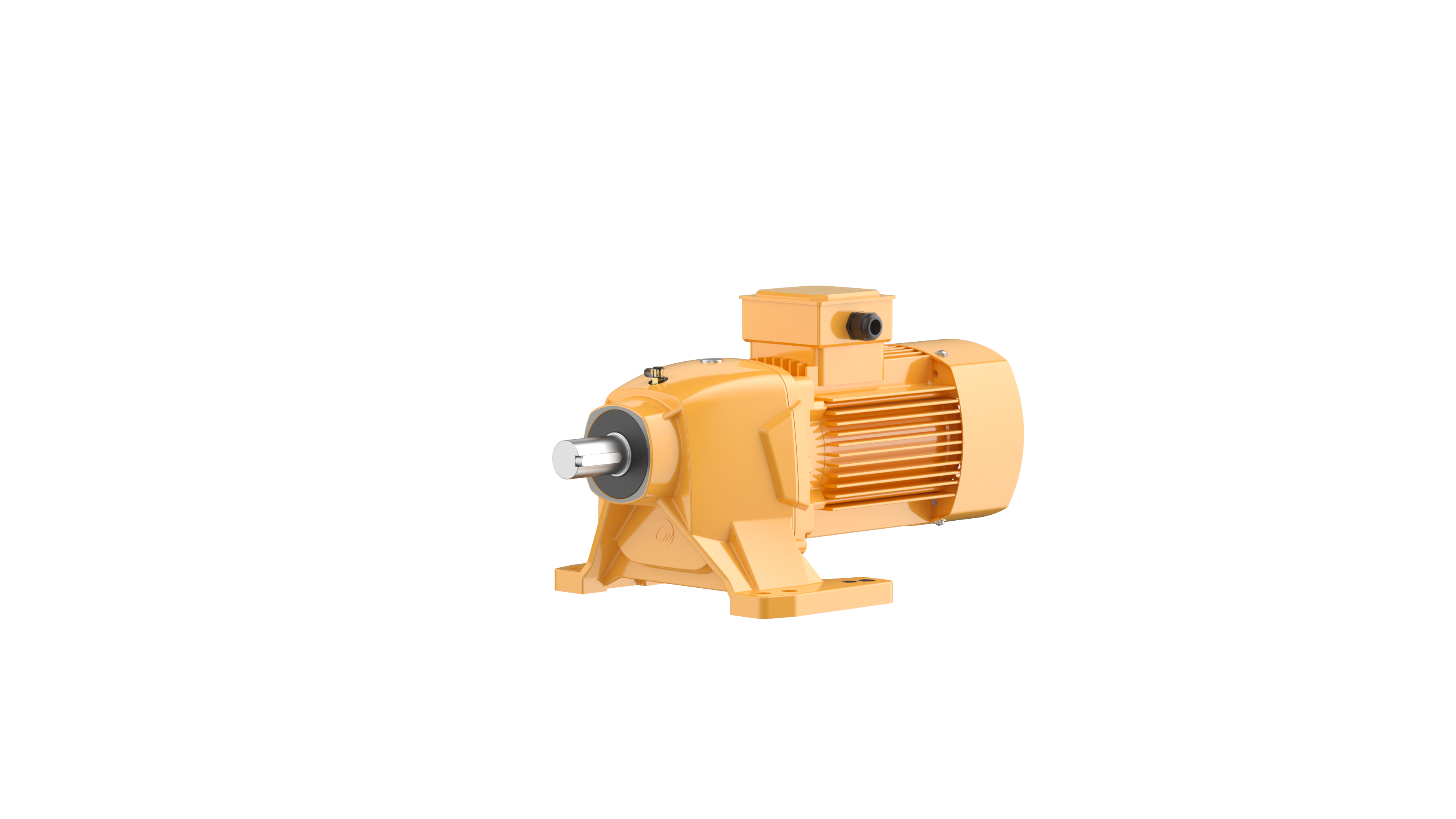
R/F/K/S series helical gearmotors
The R/F/K/S series is documented with a single-stage efficiency above 96% and a single-stage ratio range from 1.3 to 289.74 with fine division, which gives a wide spread of output speeds from one housing family. Gears are made of 20CrMnTi alloy steel with carbonitriding hardening to HRC55-65 and are ground to accuracy grade 6; the housing is high-strength cast iron. Textile is listed among the applicable industries.
For a dyeing line, the ratio spread is the practical advantage: fabric surface speed can be held with fewer stages, and efficiency matters at continuous duty because losses run for the whole shift rather than for a short cycle. The ground gear accuracy grade is relevant where the drive influences tension stability on a cloth guide roller, though the record does not state a tension tolerance for any model.
S series helical-worm variant and its documented envelope
Starshine Drive catalogue data for the S series helical-worm geared motors gives an output torque range of 90 to 4,000 N·m, a power range of 0.12 to 22 kW and a ratio range of 6.8 to 288. This combination is relevant where a right-angle layout and a higher ratio are needed in a compact installation. The figures are catalogue values for the series; confirm the exact size against the required torque at the actual roller speed.
NCJ series helical gearmotors
The NCJ series is documented at 92% to 96% efficiency, with 20CrMnTi gears carbonitrided to HRC55-65 and cast iron and alloy steel construction. Its distinguishing documented feature for a dyeing line is the motor: a special wide-frequency high-performance motor that works well under 20 Hz to 60 Hz full loading. Special lubricating oil is specified to meet 20,000 hours of normal use, and the NCJT04B/J size can replace a 1# cycloid gearbox in an energy-saving upgrade.
The wide-frequency motor is directly relevant to variable-speed fabric handling, because it allows the line to be turned down without losing the ability to carry load. The replacement note matters for retrofit projects: where older cycloid units are being removed, the NCJT04B/J is a documented substitution path in that specific size relationship, not a general claim of interchangeability across other models.
RV series worm gearboxes
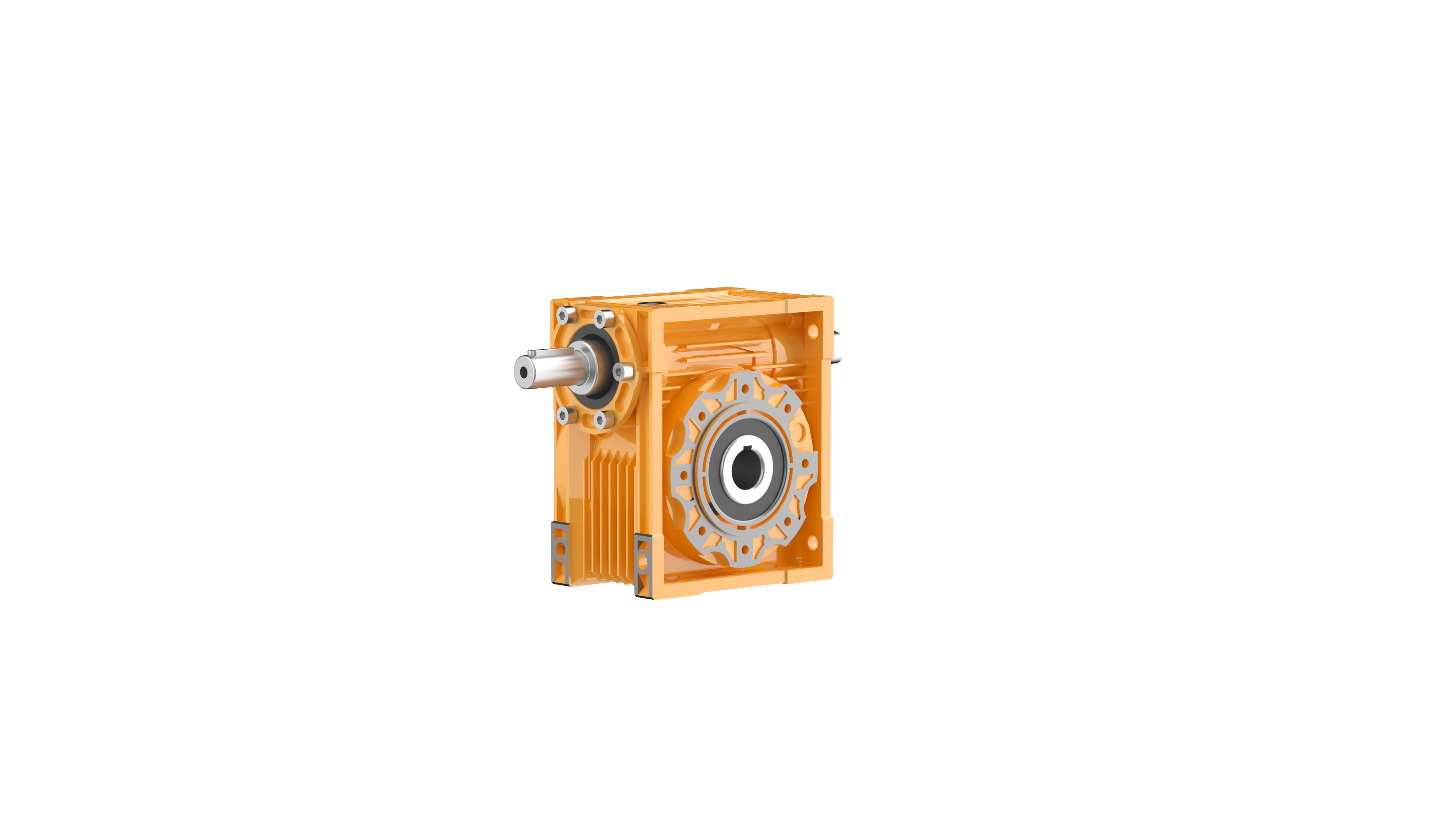
The RV series is documented with a worm shaft in 20CrMnTi alloy steel under special heat treatment for high hardness, a patented premium KK alloy copper worm wheel, a single-stage ratio up to 100 and a two-stage ratio up to 10,000, self-locking at i≥60, and a synthetic worm-gear lubricating oil intended to protect transmission efficiency and service life. The housing material is listed as aluminium parts.
What this means for a buyer is a high ratio in very few stages, plus holding behaviour at i≥60. For the hot, wet positions on a dyeing line, confirm the intended model against that specific position with the supplier: the supplied RV product record lists stage equipment, door operator and electric power as applicable industries, so wet high-temperature textile duty should be verified model by model rather than inferred from ratio alone.
Customized gearboxes and drive components
The customized product range includes a high-temperature-resistant custom reducer, a corrosion-resistant tailored gearbox and an explosion-proof customized gearbox, and lists textile machinery and printing machinery among its main application industries. Customization covers ratio, torque, shaft size, installation dimensions, housing material and surface finish, including non-standard modification to customer drawings.
On the electrical side, the component range covers integrated servo motors, three-phase asynchronous motors, converters and permanent magnet synchronous motors, with power, voltage, speed and control mode configured to match the reducer and the application. Corrosion-resistant and high-temperature-resistant materials are explicitly available for special environments. This is the route for a dyeing-line position where standard finish or standard mounting cannot meet the environment or the existing machine interface.
Step-by-step matching procedure
Step 1 — Fix the duty mode position by position
Write down, for each drive, whether it runs all-weather continuous, intermittent, or variable speed, because the textile record uses all three on the same line. A continuous cloth guide roller and an intermittently indexed actuator do not need the same thermal margin, service factor or lubrication plan.
Step 2 — Put the environment into the specification, not into a note
State the expected ambient heat, the humidity and washdown exposure, the presence of acid-base solvents, and any radiant heat source near the gearbox. The textile record already names high temperature resistance, corrosion resistance through strong anti-corrosion paint, moisture-proofing and heat radiation adaptability, so these become specified requirements rather than assumptions.
Step 3 — Size ratio and torque from surface speed and pull
Convert the required fabric surface speed and roller diameter into output speed, then match it against the documented ratio ranges: 1.3 to 289.74 single stage for R/F/K/S, 6.8 to 288 for the S series helical-worm, and up to 100 single stage or 10,000 two stage for RV. Check the resulting torque against the series envelope, such as 90 to 4,000 N·m for the S series, and against the exact model rating.
Step 4 — Decide how speed will be varied before choosing the motor
If the line needs continuous speed adjustment, the NCJ wide-frequency motor rated for 20 Hz to 60 Hz full loading is a documented option, and converters in the component range allow the drive to be configured to the control scheme. If speed is fixed and only inching is needed, self-locking at i≥60 on the RV series becomes relevant instead.
Step 5 — Specify finish, housing and interface explicitly
Use the customization options to name the housing material, surface finish, shaft size and installation dimensions. On a retrofit, the shaft and foot dimensions are usually the binding constraint, and specifying them at quotation stage avoids adaptor plates and re-machining later.
Step 6 — Plan maintenance access before the unit is installed
Easy maintenance is a stated requirement in the textile record, so agree the oil check and change access, the breathing and sealing arrangement, and the space needed to remove a unit. Documented lubrication intervals help here: 20,000 hours of normal use for NCJ with its special oil, and a synthetic worm-gear oil for RV.
Step 7 — Verify testing, compliance and the supply route
Confirm the quality evidence behind the unit: 100% full-scale testing, 100% finished product inspection and regular reliability and durability testing are stated capabilities, and production includes 100% online air tightness testing, 100% online noise testing and 100% comprehensive motor testing. Starshine Drive states that products comply with ISO, CE and CCC; confirm that the certificate scope covers the exact model and destination market. For the machine as a whole, EN ISO 12100:2010 provides the general principles for risk assessment and risk reduction in machinery design (source: ISO).
Use cases by line position
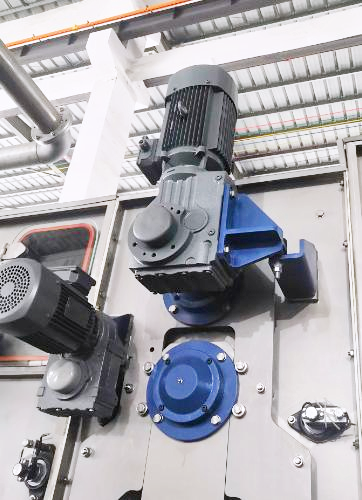
The textile record lists the equipment this drive set supports but does not publish a separate requirement table for each machine. The practical approach is to use the listed machine and the documented process it performs, then confirm the model with the supplier.
- Cloth guide rollers and pad rolls. Speed holding dominates. The wide R/F/K/S ratio spread and the NCJ wide-frequency motor are the two documented levers for holding surface speed across a speed range.
- Washing machines. The process listed is fabric washing, in a humid environment. Moisture-proofing and corrosion-resistant finish carry more weight here than maximum ratio, so specify the finish and housing treatment at quotation.
- Dyeing machines. The process listed is dyeing, with acid-base solvents present. Corrosion resistance through strong anti-corrosion paint is a named requirement, and heat radiation adaptability applies where the drive sits close to heated equipment.
- Wide rollers, hair removal devices and X-Y plaiters. These complete the listed equipment set. For folding and plaiting positions, confirm whether the motion is intermittent or continuous and whether holding torque is required when power is off; the RV self-locking characteristic at i≥60 is relevant to the holding question, subject to model confirmation.
Comparison table: documented characteristics
| Selection criterion | R/F/K/S helical gearmotors | NCJ helical gearmotor | RV worm gearbox | Customized gearbox |
|---|---|---|---|---|
| Documented efficiency | 1-stage above 96% | 92% to 96% | Not stated in the supplied record | Not stated in the supplied record |
| Ratio coverage | Single stage 1.3 to 289.74, fine division | Not stated in the supplied record | Single stage up to 100; two stage up to 10,000 | Custom ratio to drawing |
| Gear or wheel specification | 20CrMnTi, carbonitrided HRC55-65, ground to grade 6 | 20CrMnTi, carbonitrided HRC55-65 | 20CrMnTi worm shaft with special heat treatment; patented KK alloy copper wheel | Cast iron or alloy steel per specification |
| Housing and material note | High-strength cast iron | Cast iron and alloy steel | Aluminium parts | Housing material and surface finish customizable |
| Speed variation and motor integration | Matched with motors and converters from the component range | Wide-frequency motor, full load at 20 Hz to 60 Hz | Not stated in the supplied record | Configured to the application |
| Notable documented behaviour | Wide ratio spread with high single-stage efficiency | Lubricant rated for 20,000 hours of normal use; NCJT04B/J replaces 1# cycloid gearbox | Self-locking at i≥60; synthetic worm-gear oil | High-temperature-resistant and corrosion-resistant variants |
| Industry note in the record | Textile listed among applicable industries | Linked to the textile scenario as a related product | Record lists stage equipment, door operator and electric power; verify textile position | Textile machinery and printing machinery listed |
Where the table says a value is not stated, the correct next step is to request it for the exact model. An absent figure is not evidence of a weak capability, and it is not a reason to substitute a different family without checking.
Limitations and what still has to be confirmed
A specification is only as strong as its open items. The supplied records do not state a maximum ambient temperature, an ingress protection class or a permissible humidity level for any specific model, and they do not publish per-size torque tables for the R/F/K/S, NCJ or RV ranges beyond the values quoted above. Those figures have to come from the model datasheet for the exact size, mounting position and duty.
Two further boundaries are worth stating. First, company-level compliance with ISO, CE and CCC does not automatically cover every model and every market, so the certificate scope should be checked against the actual configuration. Second, self-locking at i≥60 describes a holding characteristic under the stated ratio; whether a separate brake is needed for a safety-related holding function on a specific machine is an application decision to agree with the supplier and the machine builder.
Maintenance and life planning
Lubrication is the clearest documented lever on service life. The NCJ series uses a special lubricating oil intended to meet 20,000 hours of normal use, and the RV series uses a synthetic worm-gear oil chosen to maintain transmission efficiency and improve service life. For the R/F/K/S series the record states gear grinding and grade 6 accuracy but does not state an oil change interval, so that value must be taken from the model documentation.
Corrosion protection is a maintenance item, not only a purchase item. Where a strong anti-corrosion paint is the specified defence against acid-base solvents, periodic inspection and repainting belongs in the line maintenance plan. Access for oil checks, inspection and unit removal should be confirmed at installation, because easy maintenance is one of the named requirements in the textile application record.
Support structure matters for a multi-position line. Starshine Drive states remote after-sales support alongside local dealership services, more than 10 global assembly centres and more than 100 dealer partners. For European buyers, the assembly plant in Vienna, Austria handles localized assembly, warehousing and distribution plus technical service for the European market, which is stated to shorten delivery cycles for European clients.
Frequently asked questions
Which standards and certifications should be checked for a dyeing-line gearmotor?
Starshine Drive states that its products comply with ISO, CE and CCC, and that production includes 100% online air tightness testing, 100% online noise testing and 100% comprehensive motor testing. For the machine as a whole, EN ISO 12100:2010 sets out the general principles for risk assessment and risk reduction in machinery design (source: ISO). The practical check is that the certificate scope names the exact model and the destination market, not only the manufacturer.
Can a gearmotor be supplied for high temperature, humidity and acid-base exposure?
Yes, through the customized range. Starshine Drive lists a high-temperature-resistant custom reducer and a corrosion-resistant tailored gearbox, with customization covering housing material and surface finish and with corrosion-resistant and high-temperature-resistant materials available for special environments. The textile application record requires high temperature resistance, corrosion resistance against acid-base solvents through strong anti-corrosion paint, moisture-proofing and heat radiation adaptability, so these should be written into the order specification rather than left to the standard finish.
Should a cloth guide roller use a helical gearmotor or a worm gearbox?
Decide from the duty, not from the family name. A helical unit such as the R/F/K/S series gives a single-stage ratio range of 1.3 to 289.74 with efficiency above 96%, which suits continuous speed holding where running losses accumulate. An RV worm gearbox gives a single-stage ratio up to 100, a two-stage ratio up to 10,000 and self-locking at i≥60, which suits high-ratio, few-stage layouts and holding behaviour. For a hot, wet textile position, confirm the specific RV model's suitability with the supplier before specifying it.
What drives the cost of a dyeing-line gearmotor?
Cost is driven by configuration rather than by a single rating. The main variables are the number of gear stages needed to reach the required ratio, whether a wide-frequency motor, brake or converter package is included, whether housing material and surface finish are customized for corrosion or heat, whether shafts and installation dimensions are non-standard, and how much testing and documentation is required. Because minimum order quantity is one unit, a single drive for a trial position can be ordered without committing the whole line.
Can we test one unit before rolling the change across a line?
Yes. Minimum order quantity is one unit, and units are supplied with 100% full-scale testing and 100% finished product inspection, plus regular reliability and durability testing. A sensible trial is to install one unit on the most demanding position, log the actual running temperature, speed range and any corrosion on the finish, then apply the findings to the remaining drives. A sample or quotation request can be started through the product catalogue and the company contact channel.
What lead time should be planned for a retrofit?
Two documented ranges apply to different scopes. Standard series are quoted at 7 to 20 days depending on the product, while customized, vertically configured units are quoted at 15 to 45 days. European projects can also be served through the Vienna assembly plant, which handles localized assembly, warehousing and distribution for the European market and is stated to shorten delivery cycles for European clients. Confirm the figure against the exact model and quantity when the specification is fixed; a sample or quotation request against a defined drive list is the fastest way to convert these ranges into a schedule.
Conclusion
Gearmotor selection for a hot, humid textile dyeing line is decided by the sequence of duty, environment, ratio, control and maintenance, in that order. The R/F/K/S series covers wide ratio needs with a single-stage efficiency above 96%; the NCJ series adds a wide-frequency motor rated for full load from 20 Hz to 60 Hz and a lubricant rated for 20,000 hours of normal use; the RV series delivers high ratio with self-locking at i≥60 where holding matters; and the customized range supplies the high-temperature-resistant and corrosion-resistant construction that the dyeing environment demands. Where the supplied data stops short, such as ambient temperature limits, ingress protection or per-size torque, the right move is to request the model datasheet rather than assume a value.
Guangdong Starshine Drive Co., Ltd. (STARSHINE DRIVE) is a transmission solution provider founded in 1965 and based in Sanshui District, Foshan City, Guangdong Province, manufacturing gearboxes, gearmotors, motors and control components with an annual capacity of up to 500,000 units or sets and a stated export share of 20%, serving Southeast Asia, Europe and North America. Detailed series data, drawings and configuration options are available on the company website at STARSHINE DRIVE.
Next step: send the drive list for the positions you are upgrading — machine type, required output speed, torque, mounting dimensions, ambient conditions and control method — and request a quotation or a trial unit for the most demanding position. The full product and capability overview is available in the Starshine Drive catalogue (PDF).
Have Questions or Need More Details?
Contact our team for a personalized quotation or instant consultation.
Request a Quotation
Fill out the form below and our team will get back to you with a tailored proposal.
WhatsApp Direct Chat
Prefer to chat in real-time? Message us on WhatsApp for instant assistance & quick answers.
- Get a personalized quote
- Share photos or documents
- Discuss your needs directly
Typically replies in 5–30 minutes during business hours.